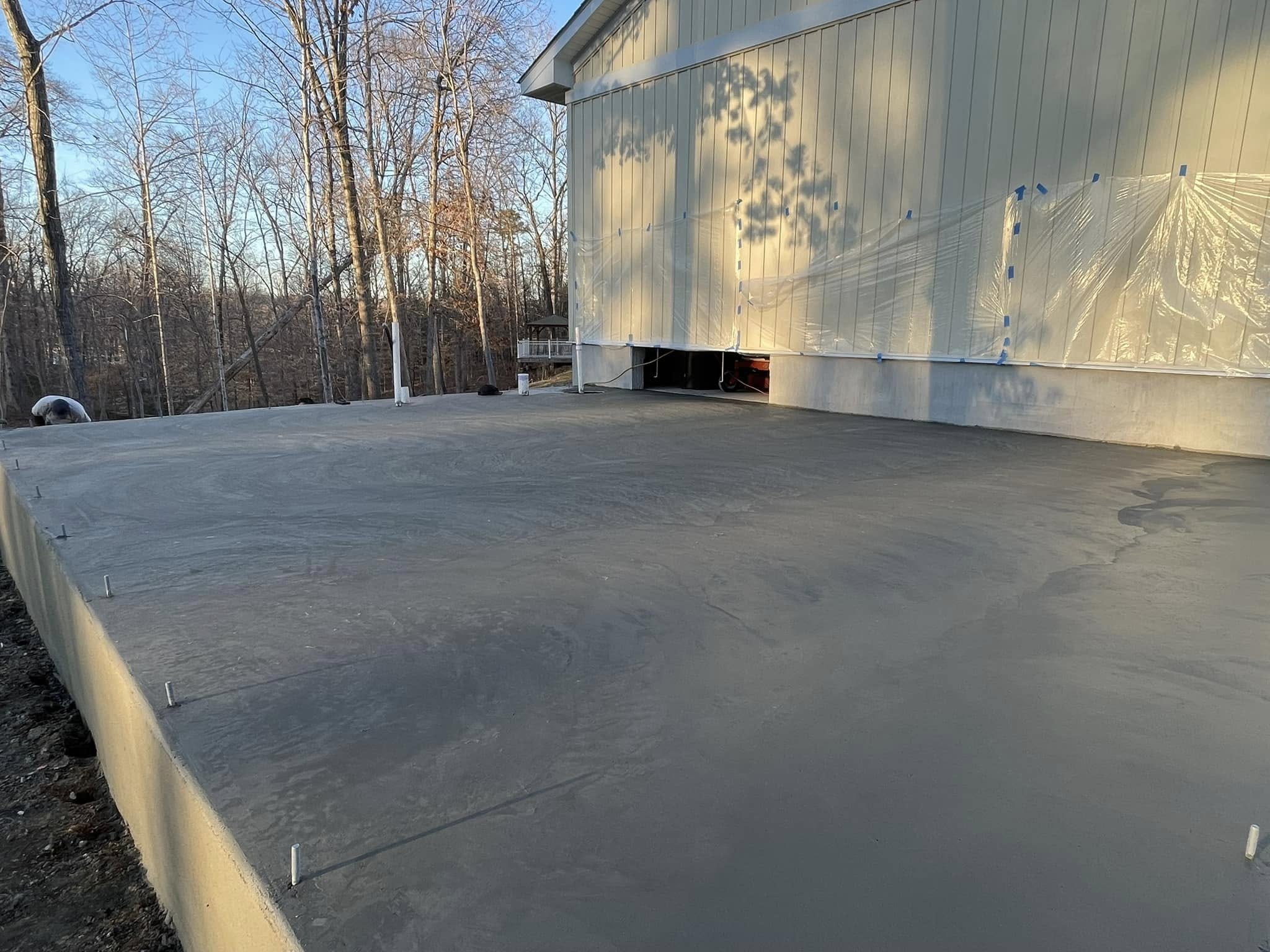
For homeowners in Fredericksburg and Stafford, installing a new driveway is a significant investment—one that affects daily use, long-term maintenance, and overall property value. Concrete has become the preferred choice for many local homeowners, but understanding why—and how to do it right—matters just as much as the material itself.
Here’s a clear, homeowner-friendly overview of the five most important questions to consider when planning a concrete driveway.
Why Concrete Is Often the Best Choice in This Region
Virginia’s climate brings hot summers, cold winters, and repeated freeze–thaw cycles, all of which take a toll on driveway surfaces. Compared to asphalt or gravel, concrete offers superior durability, resists deformation in heat, and holds up better through seasonal changes. It also provides a clean, permanent look that fits well with both suburban neighborhoods and rural properties common throughout this area.
What a Concrete Driveway Costs—and Why
Concrete driveways typically cost more upfront than asphalt or gravel, but the price reflects more than materials alone. Factors like site preparation, grading, slab thickness, reinforcement, removal of existing driveways, and finish options all influence the final cost.
While every property is different, many homeowners find that concrete’s long lifespan and low maintenance needs make it more cost-effective over time than surfaces that require regular resurfacing or regrading.
How Long a Concrete Driveway Can Last
When installed properly, a concrete driveway in this region can last 30 to 40 years or more. Longevity depends less on the concrete itself and more on proper base preparation, correct thickness, reinforcement, joint placement, and curing time. Poor installation—not the material—is the most common cause of premature cracking or failure.
With basic care, concrete often becomes a once-in-a-generation upgrade.
Choosing the Right Thickness for Your Vehicles
Not all driveways have the same demands. A standard 4-inch slab works well for everyday residential use, but homes with heavier vehicles—such as trucks, work vans, trailers, or RVs—often require 5–6 inches of concrete and added reinforcement.
Designing the slab to match how the driveway will actually be used is critical to preventing long-term issues.
Permits, Approvals, and Local Requirements
Permit requirements vary depending on whether the driveway connects to a public road, alters drainage, or changes the existing footprint. In many cases, county or state approval is required—particularly for entrance modifications.
Experienced local concrete contractors understand these requirements and typically manage the permitting process as part of the project, helping homeowners avoid delays or compliance issues.
The Big Picture
A successful concrete driveway isn’t just about pouring concrete—it’s about planning, preparation, and local expertise. From understanding costs and lifespan to choosing the right thickness and navigating permits, informed decisions early in the process lead to better results and fewer surprises later.
For homeowners in Fredericksburg and Stafford, concrete continues to stand out as a durable, low-maintenance, and value-adding solution—especially when installed by professionals who understand the region’s soil, climate, and regulations.