How a Concrete Driveway Install Works, From First Site Visit to Finished Surface
Understanding the concrete driveway installation process helps homeowners know what to expect before work begins. A concrete driveway install moves through five main stages: site evaluation, excavation and base preparation, forming, pouring and finishing, and curing. Each stage builds on the one before it, which is why a driveway that skips or rushes any of them tends to crack or settle early. American Custom Concrete has installed driveways for Fredericksburg and Stafford homeowners since 2011, and this guide explains clearly what happens at each stage of a job.
Key takeaways:
A concrete driveway install starts with a site visit and estimate, not with the pour.
Excavation and base preparation do the most to decide how long the driveway lasts, especially in Fredericksburg and Stafford’s clay-heavy soil.
Forms define the shape and edges of the driveway, and drainage is planned before any concrete is poured.
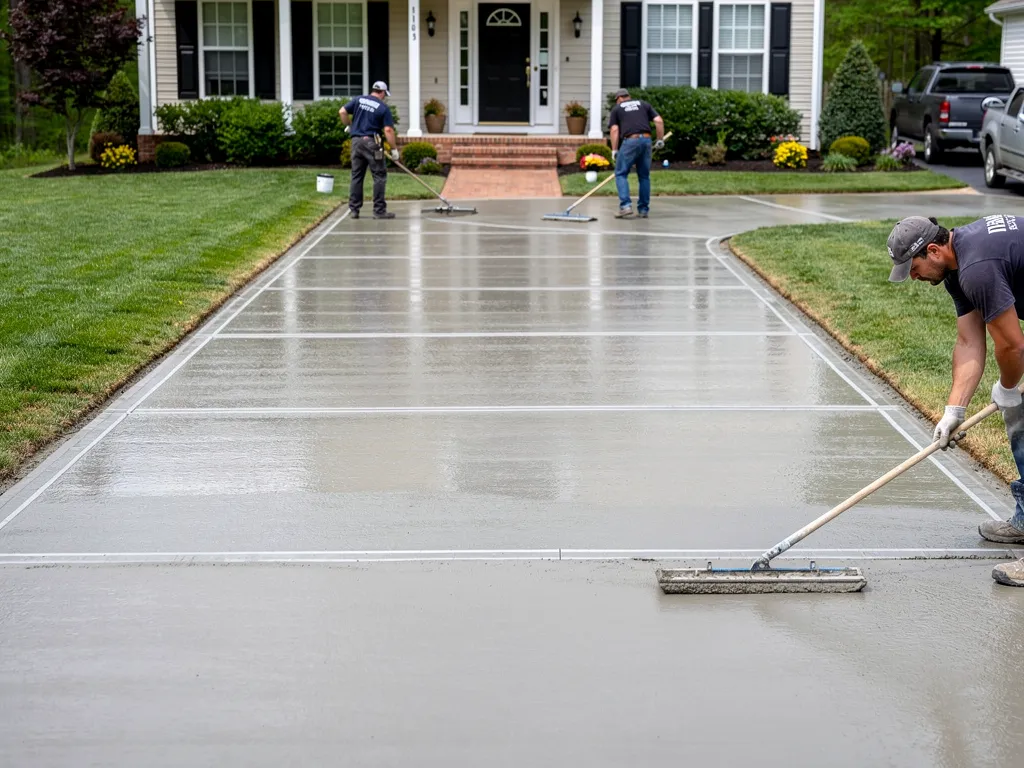
The concrete is poured, leveled, and finished to the chosen texture, such as broom, stained, or stamped.
New concrete needs about seven days before vehicles can drive on it, and full strength develops over about a month.
Knowing the stages ahead of time makes it easier to compare contractors and spot a rushed job.
Most homeowners only see the pour, but that step represents a small part of the overall work. The stages before and after it determine whether the driveway stays flat, drains properly, and holds up for years. Knowing the full process makes it easier to read an estimate and ask an experienced contractor the right questions.
What Happens First When You Hire a Concrete Driveway Contractor?
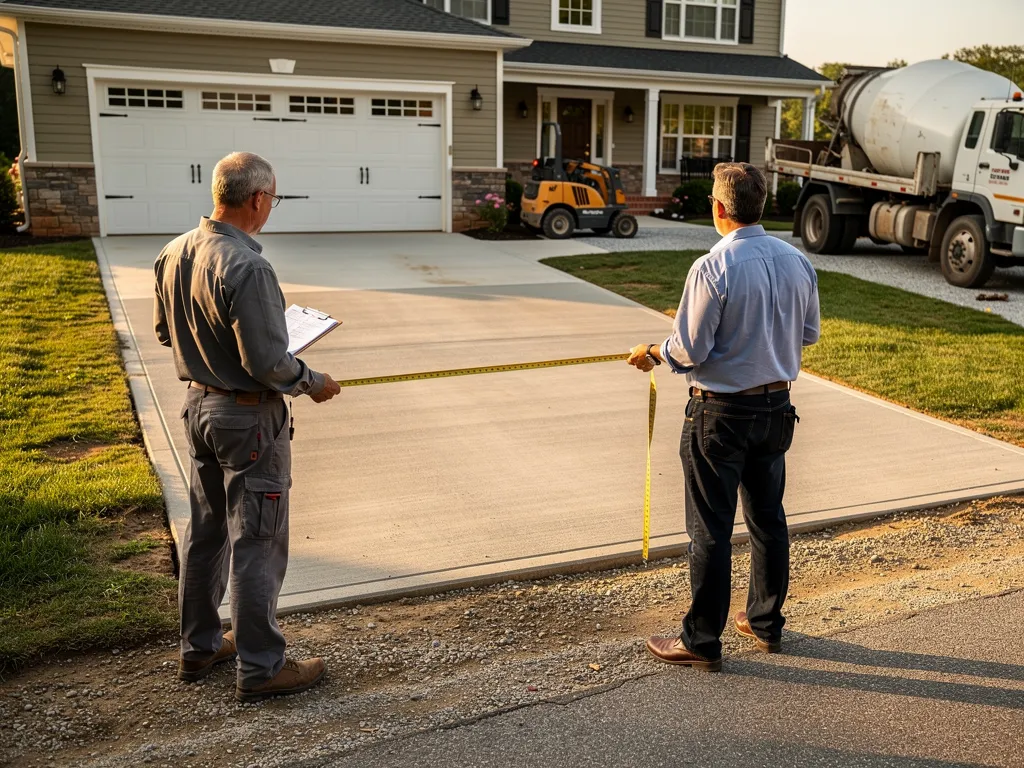
When you hire a concrete driveway contractor in Fredericksburg, VA, the first step is a site visit where the contractor measures the area, looks at the slope and drainage, checks access for equipment, and talks through the finish and layout options. That visit leads to a written estimate that describes the scope of work before anything is signed. American Custom Concrete provides free estimates that include this on-site assessment.
This stage matters because it catches problems before they become costly. A lot that slopes toward the house, an existing driveway that needs removal, or a tight access point can all change how the job is planned and priced. Homeowners who want to read more about the contractor side can see how to choose the right concrete contractor in Fredericksburg before they schedule a visit.
How Is the Old Driveway Removed and the Site Prepared?
If an existing driveway is being replaced, the crew breaks up and hauls away the old concrete or asphalt so the area is clear to the ground. Any grass, roots, or soft spots in the work area are cleared at the same time. A clean starting surface lets the crew see the real soil conditions instead of building on top of old problems.
How Is the Base Prepared for a New Concrete Driveway?
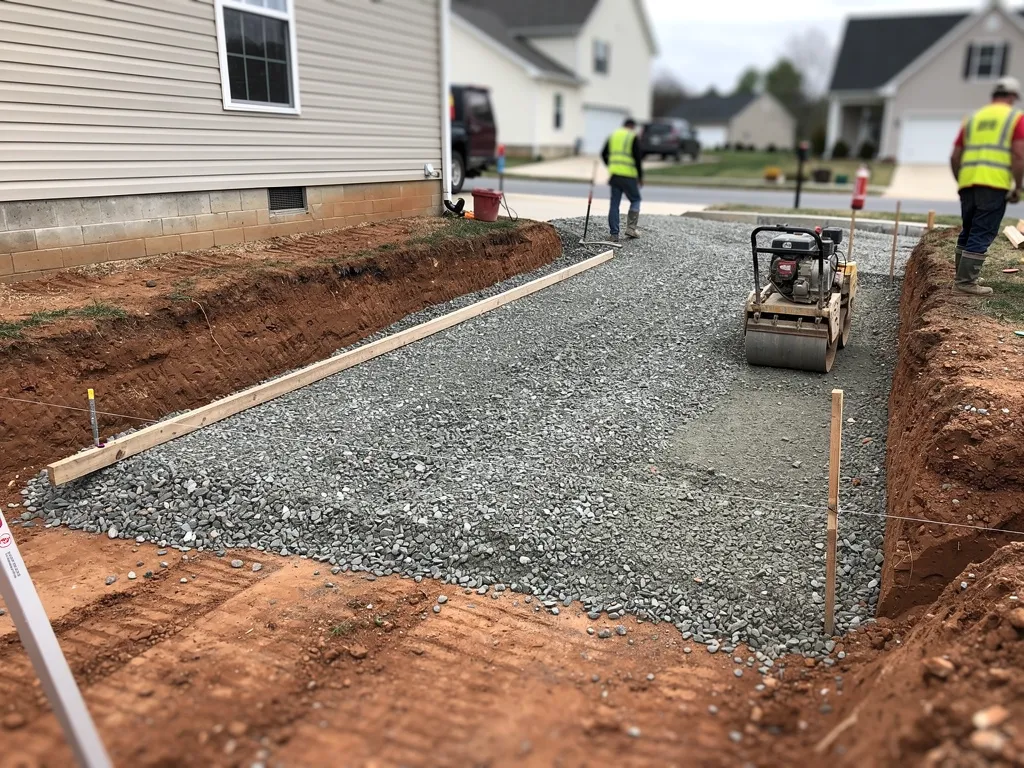
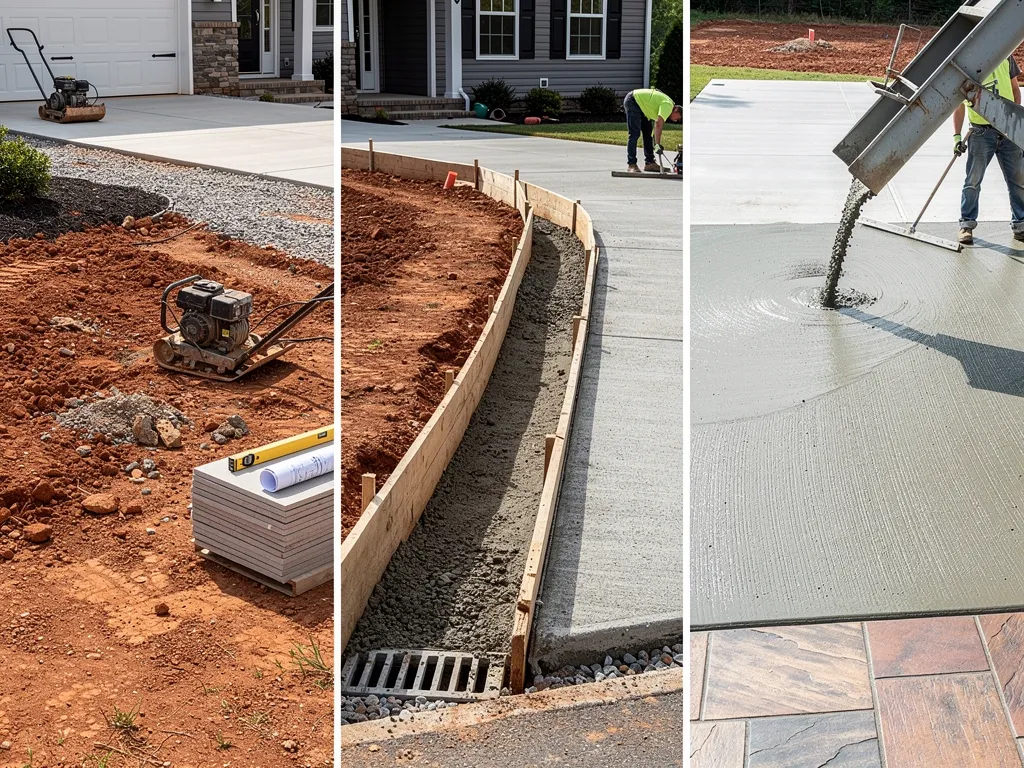
Base preparation means excavating to the correct depth, grading the soil so water drains away from the house, and compacting a stable layer of gravel underneath. This is the part of the job that is hidden once the concrete is down, and it does the most to prevent cracking and uneven settling.
Fredericksburg and Stafford sit on clay-heavy soil that expands when wet and shrinks as it dries. A properly compacted base spreads the load and gives the slab even support, so seasonal soil movement is less likely to pull the driveway out of level. Freeze-thaw cycles add to the stress in winter, which is one more reason the base should never be rushed.
Why Does Slab Thickness Matter During a Driveway Install?
Thickness is set during preparation because the excavation depth depends on it. A driveway that only carries a sedan needs less thickness than one that regularly holds trucks, trailers, or work vehicles. Homeowners planning for heavier use can read how thick a concrete driveway should be for SUVs, trucks, or work vehicles before the estimate visit.
How Are Forms Set and the Concrete Poured?
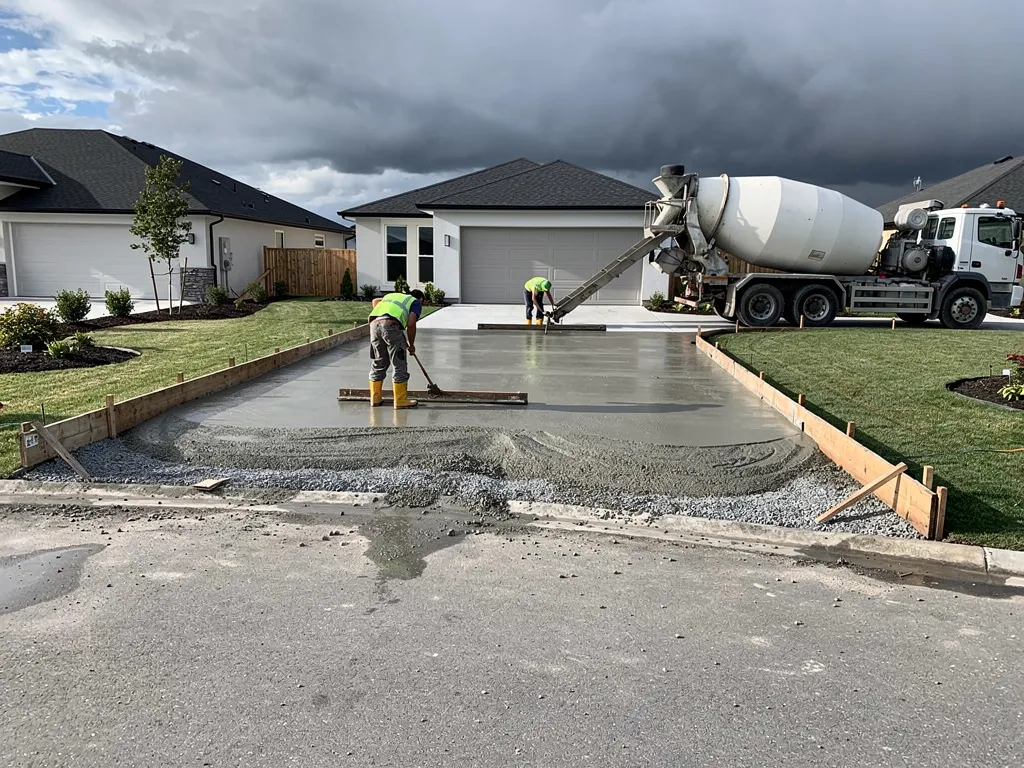
Once the base is ready, the crew sets forms along the edges to define the shape of the driveway, including its width, curves, and the transition to the street and garage. The forms hold the wet concrete in place and give the finished edges their clean lines.
The concrete is then poured, spread, and leveled to the planned thickness. Crews work steadily during the pour because concrete begins to set, and the surface needs to be worked while it is still workable. Weather matters here, since heavy rain or extreme temperatures can delay a pour, and a good contractor explains that possibility before the job starts.
How Is the Surface Finished After the Pour?
After leveling, the surface is finished to the texture the homeowner chose. A broom finish adds light texture for traction, a troweled finish is smoother, and a stamped concrete driveway is patterned to resemble stone or pavers. American Custom Concrete offers stamped and stained options alongside standard finishes. Control joints are also cut or tooled into the slab at planned spacing, which helps guide where the concrete cracks as it settles.
How Long Does a New Concrete Driveway Take to Cure?
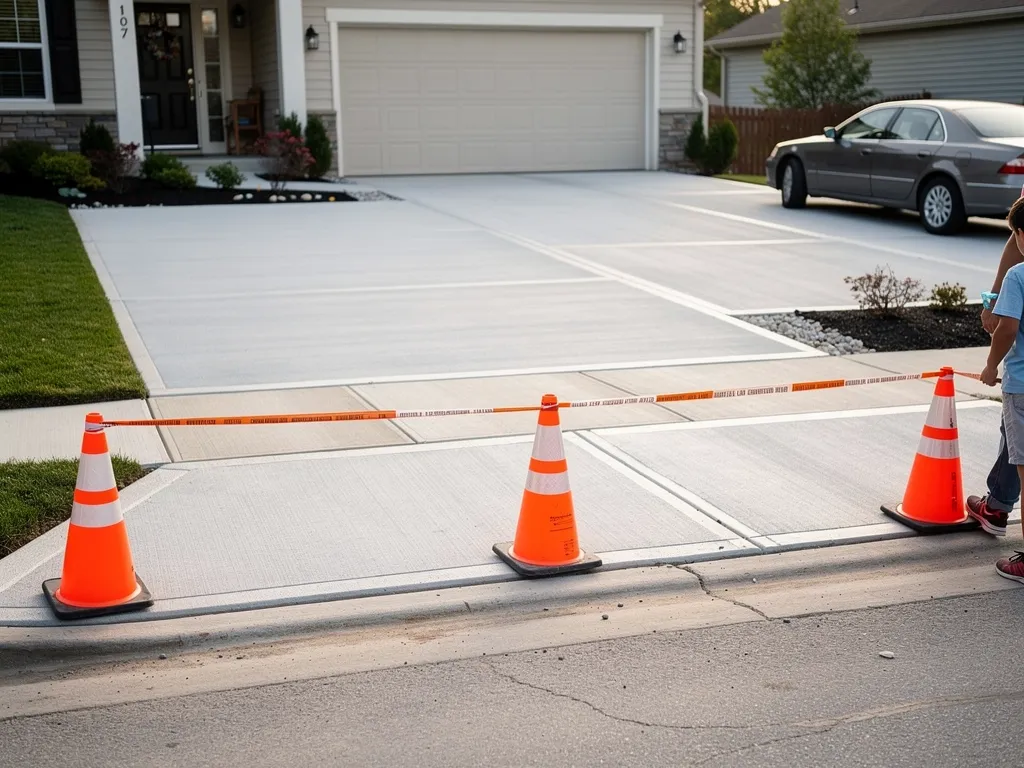
Concrete driveway curing time typically runs about seven days before the surface can handle vehicle traffic, even though it may look and feel hard within a day or two. Walking on it sooner is usually fine, but driving on a driveway that has not cured can leave marks or weaken the surface. Full strength keeps developing for about a month after the pour.
During curing, keep vehicles and heavy loads off the slab and follow the contractor’s guidance on timing. The installation itself, from removal through finishing, usually takes a few days, with curing time added before regular use begins. For a Stafford, VA concrete driveway project, ask your contractor for the timeline in writing so everyone knows exactly when the driveway is ready.
Frequently Asked Questions
How long does a concrete driveway install take?
The hands-on work usually takes a few days, from removal and base preparation through the pour and finish. After that, the concrete needs about seven days to cure before cars can drive on it, with full strength building over about a month.
What is the most important step in installing a concrete driveway?
Base preparation is the step that matters most, because the concrete is only as stable as what sits under it. Proper excavation, grading, and compaction help prevent cracking and settling, especially in clay-heavy soil like Fredericksburg and Stafford’s.
Can I drive on my new driveway right away?
No, new concrete needs about seven days of curing before vehicle traffic. Walking on it sooner is generally fine, but your contractor should confirm exactly when it is safe for your project.
Ready to see what a concrete driveway install would look like for your home? Request a call back and American Custom Concrete will walk Fredericksburg and Stafford homeowners through the process, the options, and the next steps.