Concrete Driveway Width & Size Guide | American Custom Concrete
Most single-car driveways are about 10 to 12 feet wide, and most two-car driveways are about 18 to 24 feet wide, with a typical length of 18 to 20 feet per parked vehicle. The right concrete driveway size for your home depends on how many vehicles you park, how much turning room you need, and what your lot and local rules allow. American Custom Concrete helps Fredericksburg and Stafford homeowners work through these decisions before a single yard of concrete is poured.
Key takeaways:
A one-car driveway typically needs about 10 to 12 feet of width, and a two-car driveway about 18 to 24 feet, though every property is different, so these figures are a starting point rather than a fixed rule.
Width is only part of the equation: each parked vehicle also needs roughly 18 to 20 feet of length to sit clear of the street.
Homeowners who plan to turn around in the driveway, host guests, or park a truck or trailer should build in additional room for that use.
A lot’s shape, slope, and drainage can limit driveway size as much as the vehicles it needs to hold, sometimes more.
Local ordinances and neighborhood association rules can also restrict driveway size, so it is worth confirming those requirements before finalizing a design.
A free, on-site estimate from American Custom Concrete remains the most reliable way to determine the right size for a given property.
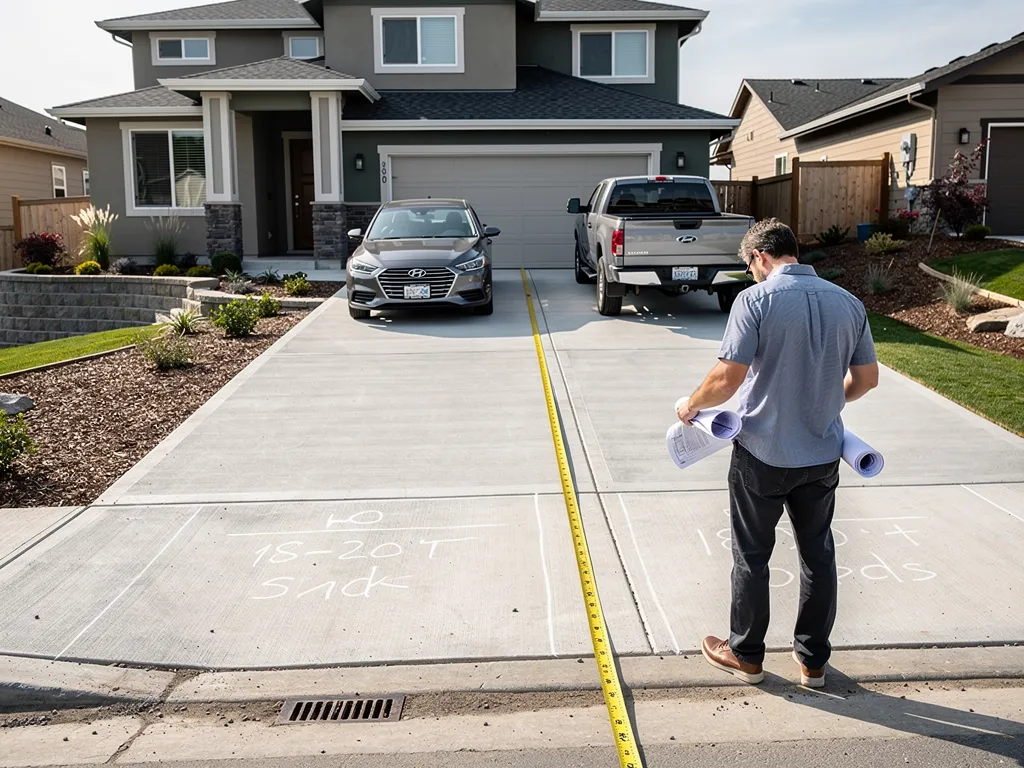
Driveway size is easy to misjudge on paper. A layout that looks generous in a drawing can feel tight once two cars, a trash can, and a guest all need space. Planning the size carefully from the start costs nothing, while widening or extending a driveway later requires new work and matching the existing concrete.
What Is the Average Driveway Width?
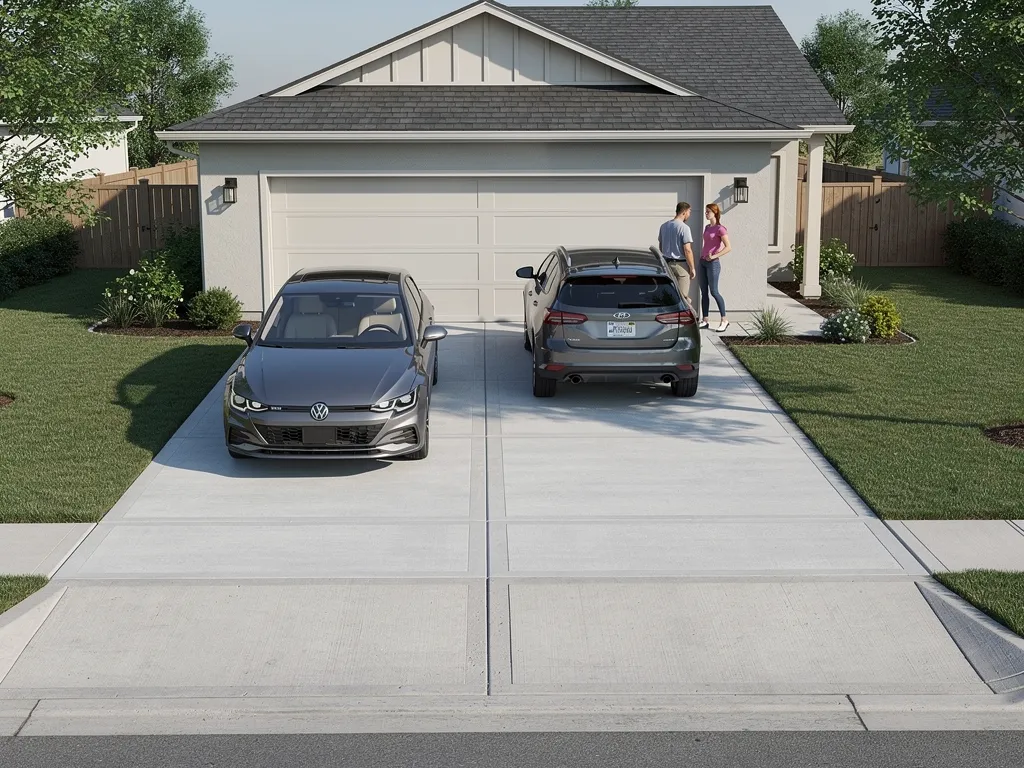
The average driveway width is about 10 to 12 feet for a single-car driveway and about 18 to 24 feet for a two-car driveway. A width near the low end works for a straight run to a garage, while the higher end gives more room to open doors, load groceries, or park two vehicles side by side without squeezing.
These numbers are common starting points used across the industry, not requirements. Many homeowners choose a width a little above the minimum so the driveway stays comfortable for everyday use, especially with larger vehicles like SUVs and full-size trucks.
How Wide Should a Driveway Be for One Car, Two Cars, or Three Cars?
For one car, about 10 to 12 feet is usually comfortable. For two cars side by side, about 18 to 24 feet gives each vehicle enough room, with the wider end leaving space for opening doors. For three cars, homeowners often combine a wide driveway section with a parking pad or a flared area near the garage rather than building one very wide strip the whole length.
Driveways often narrow near the street and widen near the garage. That shape keeps the curb cut modest while still giving you working room where you park and turn.
How Long and How Large Should a Driveway Be?
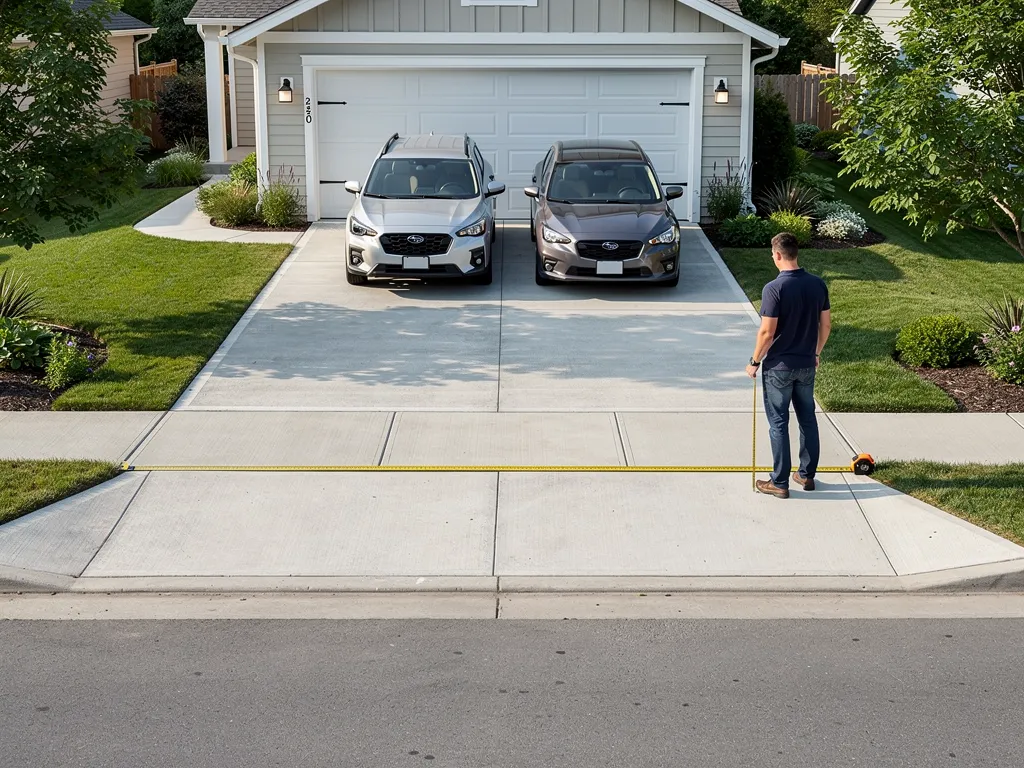
Driveway length should be enough that parked vehicles do not stick out into the street or across the sidewalk, which usually means about 18 to 20 feet for each vehicle parked end to end. The total size of the driveway is simply its width times its length, so a typical two-car driveway size is about 20 feet wide and 40 feet long, or roughly 800 square feet.
Thinking in square footage also helps when you request an estimate, because size is one of the main factors that shapes the price of a concrete driveway. Homeowners who want background on how size affects pricing can read about what homeowners in Fredericksburg and Stafford should know before getting started.
Do You Need Extra Room for Turning, Guests, or Parking Pads?
Many homeowners add extra space for turning around so they do not have to back out into the street, for guest parking, or for a boat, camper, or work vehicle. A parking pad, which is a separate paved area next to or beyond the main driveway, can provide that extra room without widening the entire driveway. American Custom Concrete builds driveways and parking pads, and both can be planned together.
What Factors Decide the Right Driveway Size for Your Lot?
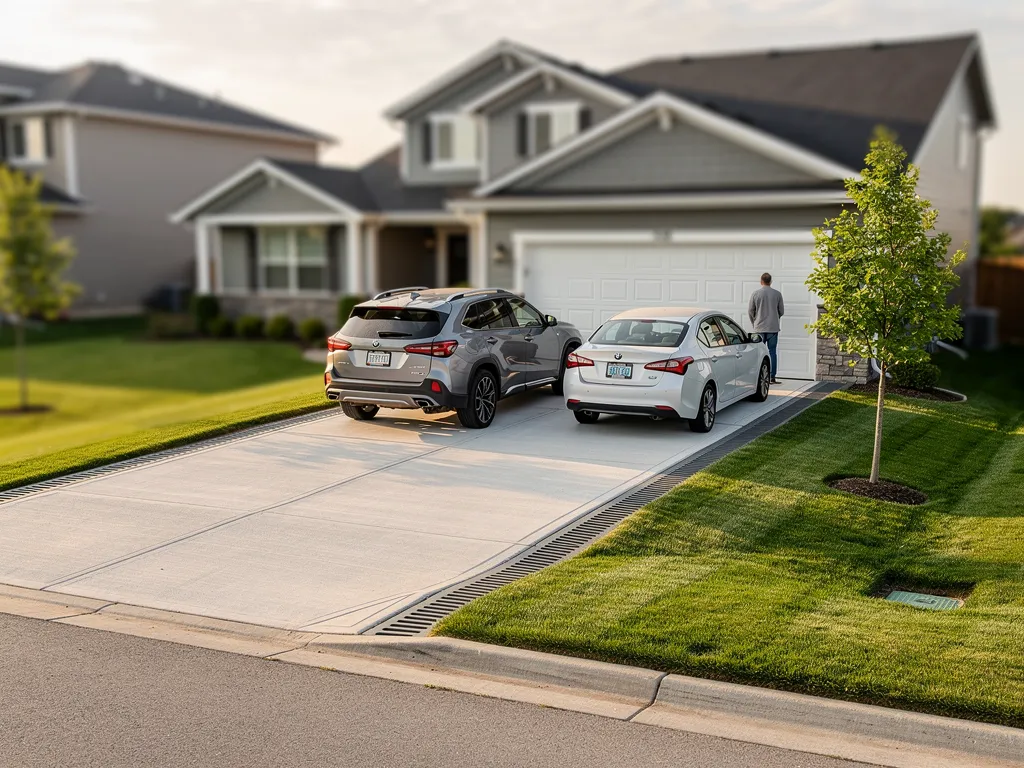
The right driveway dimensions come from a mix of how you use it and what your property allows. The main factors are the number and size of your vehicles, the slope and shape of the lot, drainage, the distance from the street to the garage, and any local or neighborhood rules.
How Do Lot Shape, Slope, and Drainage Affect Driveway Size?
A narrow or sloped lot can limit how wide a driveway can reasonably be, and a driveway also needs to direct water away from the house rather than toward it. Fredericksburg and Stafford homes sit on clay-heavy soil, so good grading and drainage are especially important when a driveway is long or wide. A larger driveway means more surface that sheds water, so the layout should account for where it will go.
How Does Vehicle Weight Affect Driveway Planning?
A bigger driveway for heavier vehicles also needs the right slab thickness, not just the right footprint. A driveway that regularly holds trucks, trailers, or work vehicles needs more thickness than one used only by cars. Homeowners can read more about how thick a concrete driveway should be for SUVs, trucks, or work vehicles when deciding how large and how strong to build.
Do Local Rules Affect How Wide a Driveway Can Be?
They can. Cities, counties, and neighborhood associations sometimes set limits on driveway width, the size of the curb cut, or how much of a front yard can be paved. These rules vary, so check with your locality and any homeowners association before you finalize a design, especially for projects in Fredericksburg, Stafford, and the surrounding neighborhoods. American Custom Concrete can talk through your plans during the estimate so you know what to confirm.
Frequently Asked Questions
What is the standard width of a driveway?
A standard single-car driveway is about 10 to 12 feet wide, and a standard two-car driveway is about 18 to 24 feet wide. These are common guides, and the best width for your home depends on your vehicles and lot.
How big should a driveway be for two cars?
A two-car driveway is often about 18 to 24 feet wide and at least 18 to 20 feet long per vehicle if cars are parked end to end. A width of 20 feet or more gives extra room to open doors comfortably.
Can I make my existing driveway wider?
In many cases, yes, either by widening the existing driveway or adding a parking pad beside it. A contractor can look at the lot, drainage, and any local rules during a free estimate and recommend what makes sense for your property.
Not sure what size makes sense for your home? Call American Custom Concrete at (540) 845-5381 or request a call back and the team will help Fredericksburg and Stafford homeowners find a driveway size that fits their vehicles, their lot, and their budget.