How Can I Tell if My Concrete Patio Needs Repairs or Replacement?
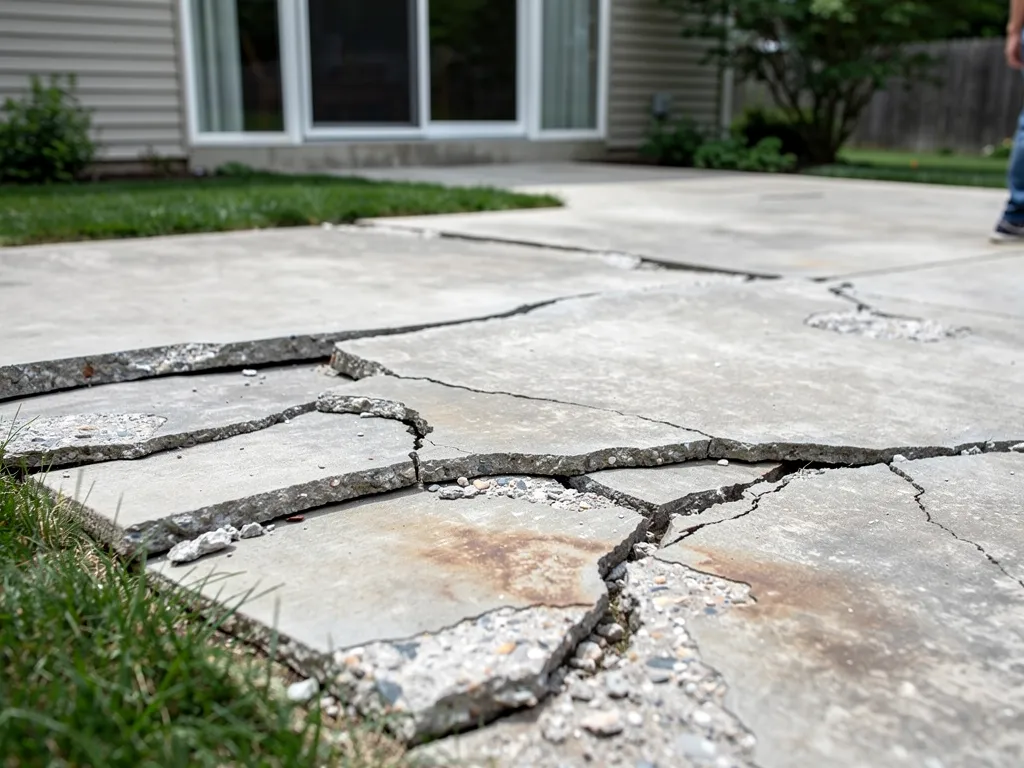
Visible cracks wider than a quarter inch, uneven or sunken sections, and crumbling edges are among the clearest signs a concrete patio needs repair or full replacement. Pooling water after rain and exposed rebar indicate structural failure. American Custom Concrete, Inc. recommends professional evaluation when these signs appear, as small issues escalate into costly full replacements.
Key Takeaways
Visible cracks wider than a quarter inch signal concrete patio damage requiring professional evaluation.
Pooling water after rain and exposed rebar indicate structural failure in a concrete patio.
Uneven or sunken slabs create tripping hazards and worsen as soil shifts beneath the slab.
Hairline cracks that keep spreading after winter or heavy rain demand immediate professional attention.
What Are the First Signs of Patio Damage?
Concrete patios rarely fail without warning. The earliest indicators of trouble appear on the surface long before structural integrity is compromised. Homeowners who recognize these signals avoid expensive full replacements.
Visible cracks are the most common sign of concrete damage. Small hairline cracks might seem harmless at first. However, these fissures allow water to seep in, which weakens the structure over time. A single thin crack can widen after a freeze-thaw cycle, turning a cosmetic issue into a structural one.
What Does Flaking Concrete Mean?
Flaking or scaling, also known as spalling, occurs when the concrete surface chips or flakes away, especially after winter. This signals that the surface layer has weakened due to freeze-thaw cycles or improper curing. Left unaddressed, concrete spalling repair becomes more involved as scaling exposes the aggregate beneath and accelerates deterioration.
Why Are Uneven Slabs Dangerous?
An uneven concrete patio slab creates more than an eyesore. When sections of a concrete patio have visibly lifted, a noticeable lip forms between slabs. This unevenness creates a tripping point that becomes a liability for property owners. The problem often worsens as soil shifts beneath the slab.
Hairline cracks that keep spreading demand immediate attention. These thin cracks, sometimes barely visible, slowly grow wider or longer over months. Property owners often notice them after winter or following a heavy rainstorm. What begins as a faint line can develop into a network of fractures.
American Custom Concrete evaluates these early warning signs during a professional assessment. The company’s experience with Virginia’s clay-heavy soils and freeze-thaw patterns informs every inspection. Catching damage at this stage often means repair rather than replacement. A related concern involves widespread cracking and sunken slabs, which signal deeper structural failure when ignored.
How Do I Decide Between Repair and Replacement?
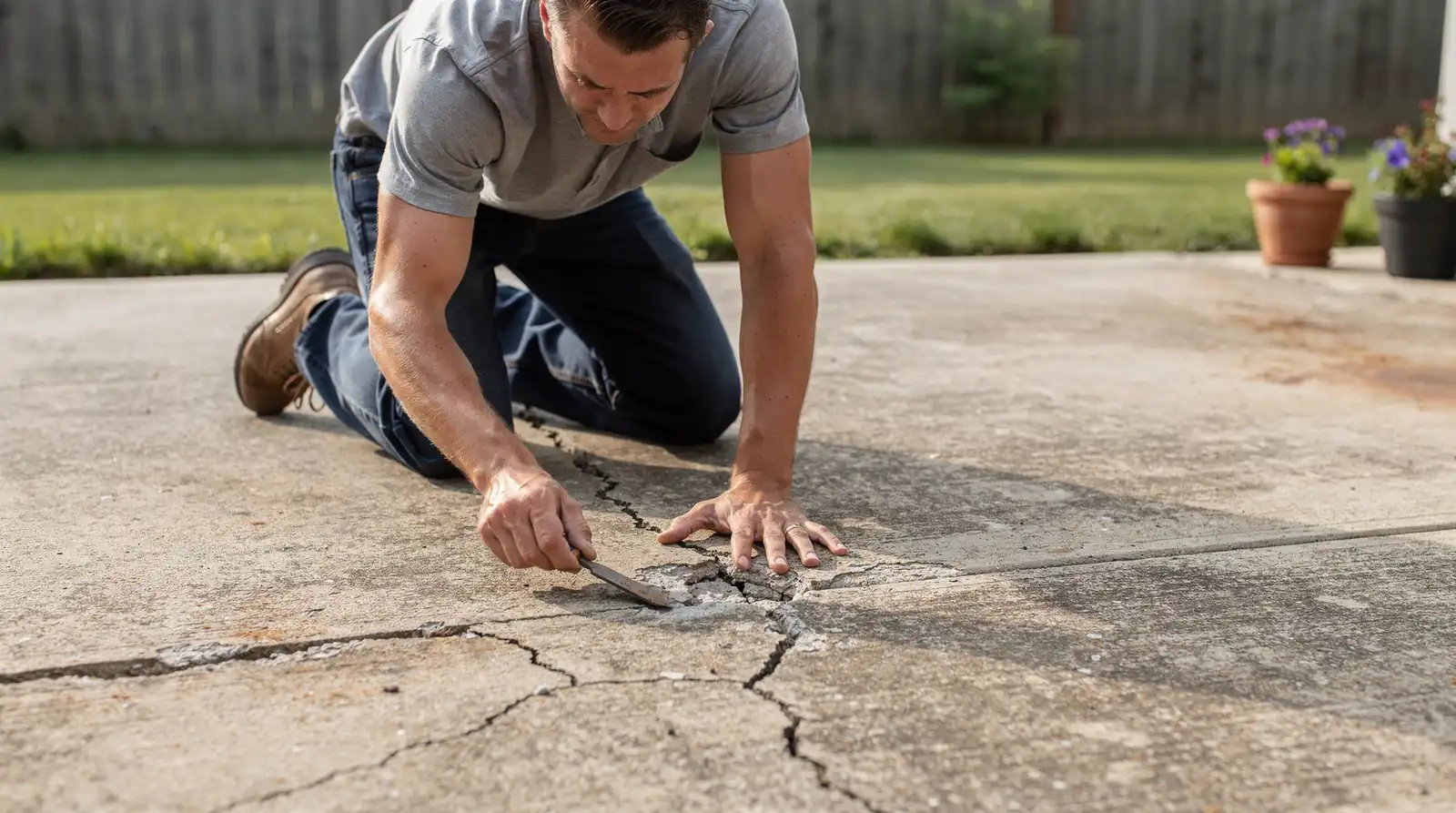
Weighing concrete patio repair vs replacement comes down to damage severity, underlying causes, and long-term cost. A systematic evaluation of cracks, surface wear, and structural stability reveals the most practical path forward. Property owners who delay this assessment risk escalating repair costs and safety hazards that a simple patch cannot resolve, and understanding the concrete patio replacement cost factors upfront helps set realistic expectations.
What Are the First Signs a Patio Can Be Repaired?
Small, hairline cracks are normal and can often be sealed or patched. These surface-level imperfections do not compromise the slab’s integrity when addressed promptly. A professional contractor applies specialized fillers that prevent water intrusion and halt further deterioration, one of the most reliable cracked concrete patio solutions available. The key indicator is stability: cracks that remain narrow and do not shift under weight typically qualify for repair rather than replacement.
When Does Cracking Signal a Need for Replacement?
Widening or spreading cracks demand immediate action. This pattern indicates movement beneath the slab, often caused by soil instability or freeze-thaw cycles. Concrete is ideal for Northern Virginia because it resists heat, salt, and moisture better than asphalt when properly installed. However, freeze-thaw cycles in Northern Virginia demand thicker slabs and expansion joints to prevent cracking. Without these measures, repeated expansion and contraction fractures the concrete beyond surface repair. A full replacement becomes necessary when cracks exceed a quarter-inch in width or create uneven planes across the patio surface.
How Do Soil Conditions Affect the Decision?
Clay and uneven ground require professional grading and a strong gravel base for a stable concrete surface. Patios built on poorly compacted soil develop settlement issues that no amount of patching corrects. Sunken sections, pooling water, and visible gaps between the slab and the home’s foundation point to base failure. In these cases, replacement with proper excavation and base preparation delivers a permanent solution. The company’s expertise in concrete driveway crack repair extends to patio evaluations, ensuring the same diagnostic rigor applies to every outdoor surface. A contractor who understands local soil behavior determines whether the existing base can support repairs or demands complete reconstruction.
What Steps Lead to a Lasting Patio Fix?
A lasting patio repair follows a structured sequence. Skipping any phase invites premature failure and costly rework. Homeowners who understand the process avoid the frustration of repeat fixes.
How Does the Repair Process Begin?
Every project starts with a consultation and a free estimate. American Custom Concrete, Inc. assesses the damage, discusses material options, and outlines a clear scope of work. This initial step eliminates guesswork and sets accurate expectations.
What Happens During Installation?
The installation phase relies on durable materials and proven methods suited to Virginia’s climate. Technicians address underlying soil issues, pour or patch concrete with precision, and apply control joints to manage future stress. Responsive service keeps the project on schedule. The team then seals the surface where appropriate, locking out moisture that triggers freeze-thaw cracking.
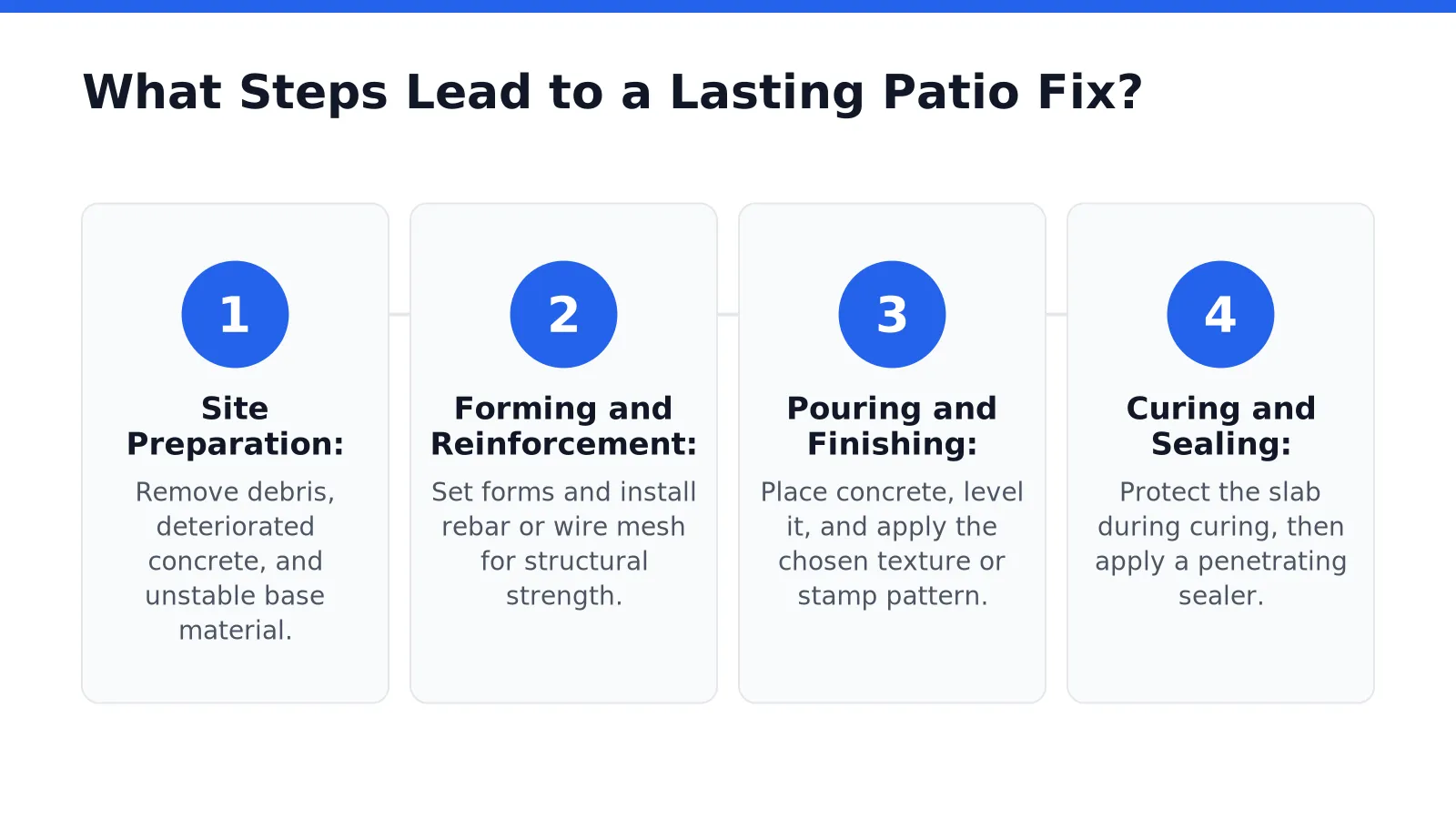
1️⃣ Site Preparation: Remove debris, deteriorated concrete, and unstable base material.
2️⃣ Forming and Reinforcement: Set forms and install rebar or wire mesh for structural strength.
3️⃣ Pouring and Finishing: Place concrete, level it, and apply the chosen texture or stamp pattern.
4️⃣ Curing and Sealing: Protect the slab during curing, then apply a penetrating sealer.
What Protections Come With the Work?
Clients receive a one-year warranty on all completed work. The company operates as a licensed and insured contractor, a distinction that shields property owners from liability. Membership in the Fredericksburg Builders Association and the Better Business Bureau, along with Angie awards and high-rated reviews, confirms a track record of quality. A custom patio installation that follows these steps resists Virginia’s clay-heavy soils and seasonal shifts for decades.
Frequently Asked Questions
What does flaking concrete on my patio mean?
Flaking or scaling signals the surface layer has weakened due to freeze-thaw cycles or improper curing, and left unaddressed, it accelerates deterioration.
How do I decide between repairing or replacing my concrete patio?
The decision hinges on damage severity, underlying causes, and long-term cost; American Custom Concrete recommends professional evaluation when signs appear.
Conclusion
A concrete patio that shows widespread cracking, uneven slabs, or surface scaling demands a professional evaluation to determine whether repair or replacement offers the best long-term value. Property owners who act on these warning signs avoid escalating damage and higher costs. A thorough assessment of the slab, base, and site conditions guides the right decision and delivers a durable, safe outdoor surface.