Concrete Patio vs. Pavers in Fredericksburg: Choosing the Best Patio Material for Your Home
When it comes to enhancing outdoor living spaces, choosing the right patio material is crucial for both functionality and aesthetics. Homeowners in Fredericksburg often find themselves weighing the benefits of concrete patios against paver patios. This article will explore the key differences, advantages, and disadvantages of each option, helping you make an informed decision for your home. Understanding the unique characteristics of concrete and paver patios can significantly impact your outdoor experience, from durability to maintenance and cost. We will delve into various aspects, including cost considerations, maintenance requirements, and aesthetic options, to provide a comprehensive overview of these popular patio materials.
Concrete Patios vs. Paver Patios: Advantages and Disadvantages
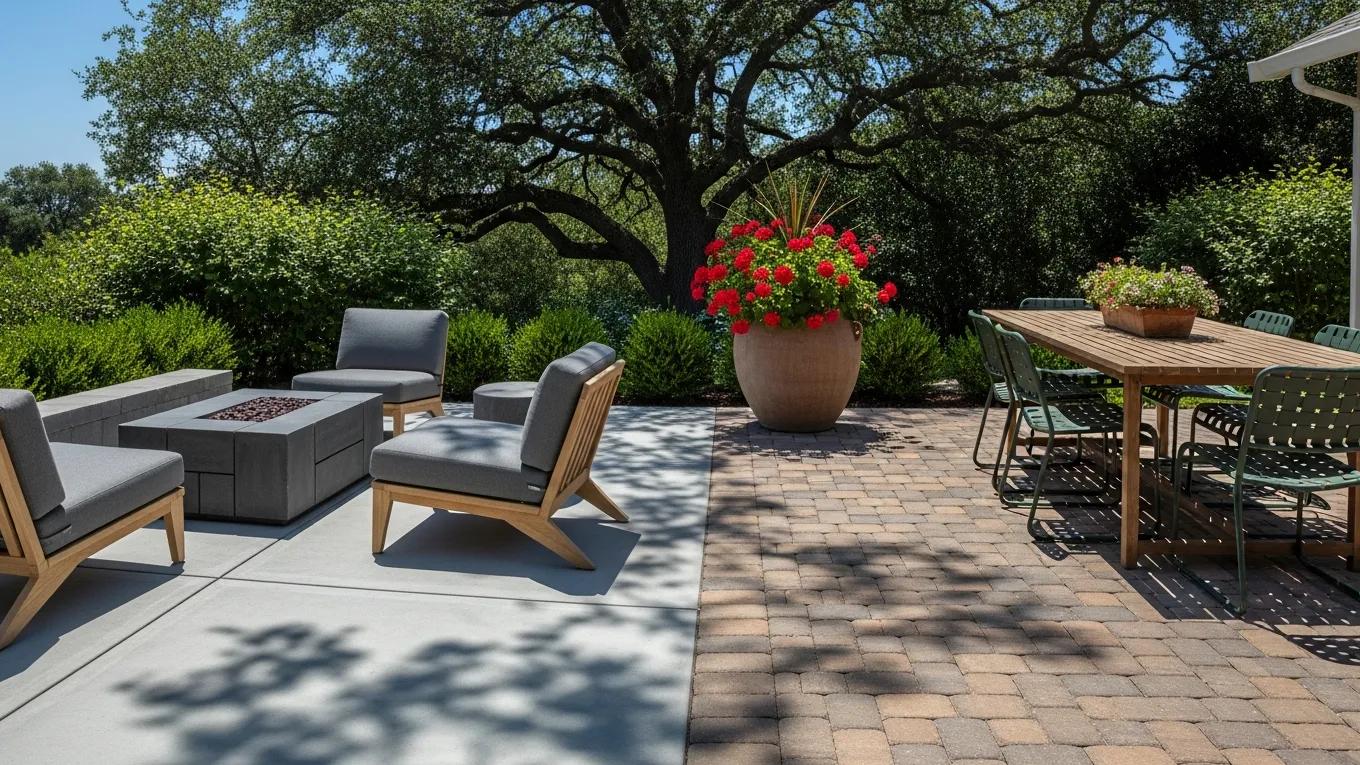
When comparing concrete patios and paver patios, it’s essential to consider their respective advantages and disadvantages. Each material offers unique benefits that cater to different homeowner preferences and needs.
Concrete Patios:
Concrete patios are known for their durability and longevity. They can last between 20 to 30 years with proper maintenance, making them a cost-effective choice for homeowners. Additionally, concrete patios typically cost between $6 to $10 per square foot, which can be more affordable than paver options. They require minimal upkeep, mainly consisting of regular cleaning and sealing every few years. However, concrete can crack over time, especially in areas with extreme temperature fluctuations, and may not offer the same aesthetic variety as pavers.
Paver Patios:
Paver patios, on the other hand, provide a classic, modular look with a wide range of colors and patterns, allowing for greater design flexibility. Individual pavers can be easily replaced if damaged, making repairs straightforward. However, paver patios generally require more maintenance, including periodic leveling and weeding, which can be a drawback for some homeowners. The initial cost of paver patios can also be higher, depending on the design and installation complexity.
Cost Considerations:
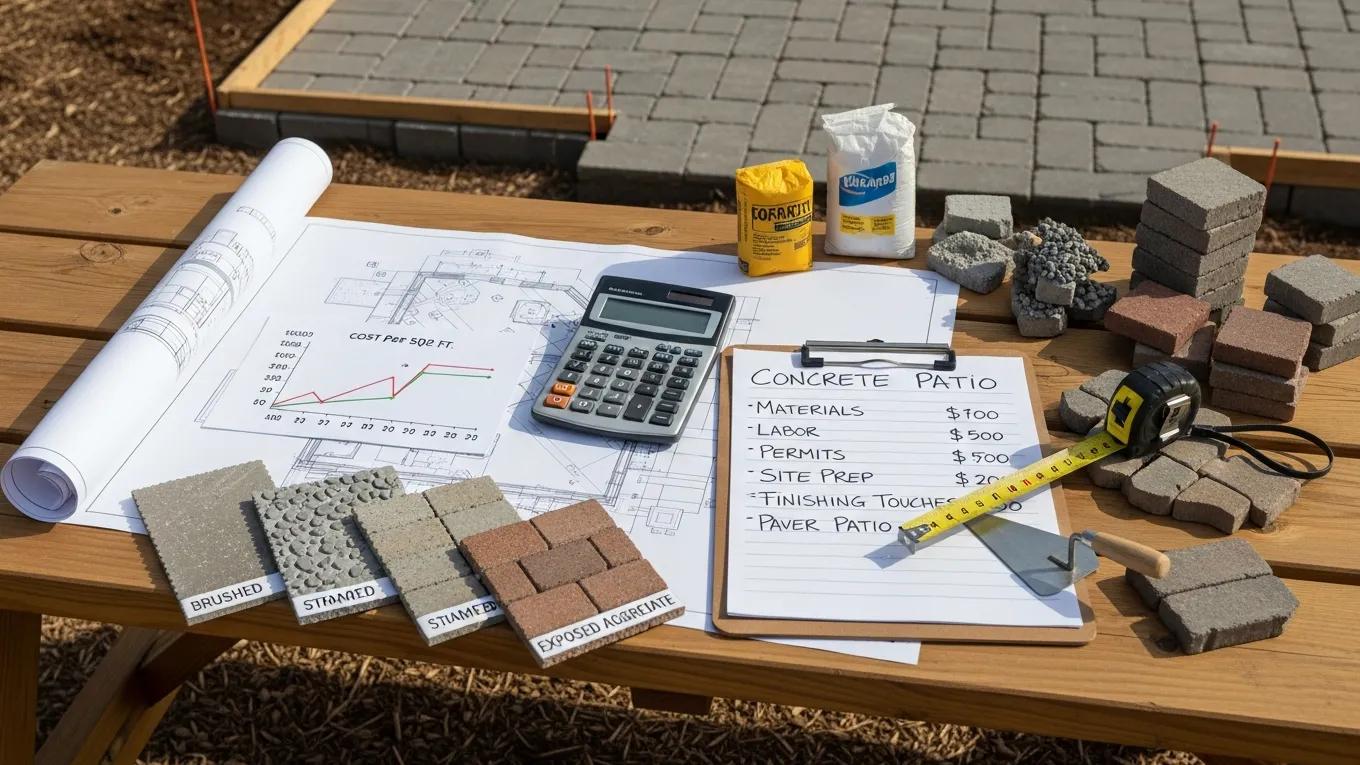
Understanding the cost differences between concrete and paver patios is crucial for budgeting your outdoor project.
Concrete patios typically offer a more budget-friendly option, while paver patios can vary widely based on design and installation complexity.
Maintenance Requirements:
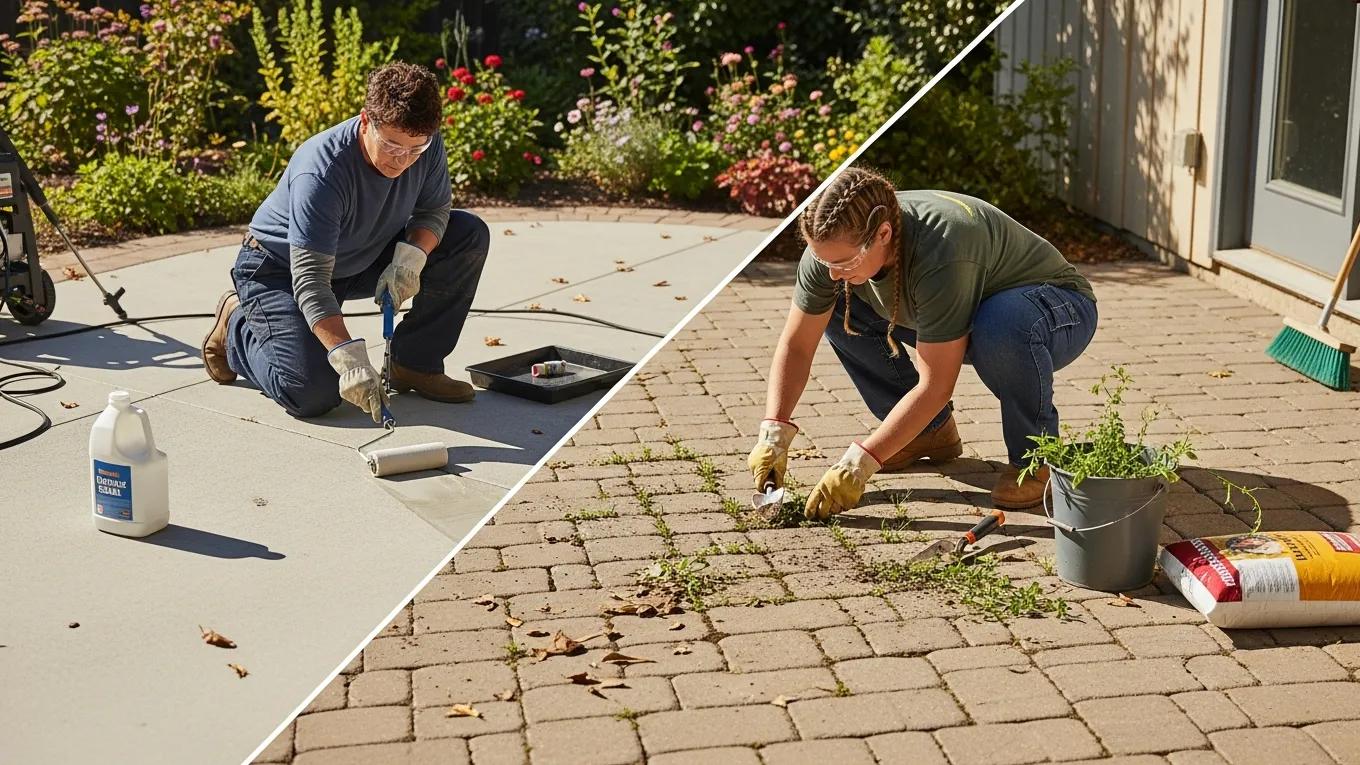
Both concrete and paver patios have distinct maintenance needs that homeowners should consider.
- Concrete Patios: Require occasional cleaning and sealing to maintain their appearance and prevent cracking.
- Paver Patios: Need regular weeding and leveling to ensure the pavers remain even and free from plant growth.
Understanding these maintenance requirements can help you choose the best option for your lifestyle and preferences.
Aesthetic Options:
The design possibilities for both concrete and paver patios are extensive, allowing homeowners to create unique outdoor spaces.
- Concrete Patios: Offer customizable finishes, including stamped and stained options, which can mimic the look of natural stone or brick.
- Paver Patios: Provide a classic look with various shapes, colors, and patterns, allowing for intricate designs that can enhance the overall aesthetic of your home.
What Are the Key Differences Between Concrete Patios and Paver Patios?
The primary differences between concrete and paver patios lie in their durability, maintenance, and aesthetic options. Concrete patios are generally more durable and cost-effective, while paver patios offer greater design flexibility and ease of repair.
How Do Concrete Patios Compare to Pavers in Durability and Longevity?
Concrete patios can last between 20 to 30 years with proper maintenance, making them a long-lasting option. In contrast, paver patios may require more maintenance and can shift under heavy traffic, potentially affecting their longevity.
What Are the Design and Aesthetic Options for Concrete and Paver Patios?
Both patio types offer unique design options. Concrete can be customized with various finishes, while pavers come in a wide range of colors and patterns, allowing for creative designs that can complement your home’s architecture.
How Do Concrete Patio Costs Compare to Paver Patio Installation in Fredericksburg?
In Fredericksburg, concrete patios typically range from $6 to $10 per square foot, while paver patios can vary significantly based on design and installation complexity, often costing between $10 to $20 per square foot.
What Factors Influence the Cost of Concrete Patios in Fredericksburg, VA?
Several factors can influence the cost of concrete patios, including:
- Material Prices: The cost of concrete and any additional materials needed for finishing.
- Labor Costs: The complexity of the installation and the experience of the contractor.
- Site Preparation Requirements: The condition of the site and any necessary grading or excavation.
How Does Paver Patio Installation Pricing Vary Locally?
Paver patio installation pricing can vary based on:
- Material Type: Different paver materials can have varying costs.
- Design Complexity: Intricate designs may require more labor and time.
- Size of the Patio: Larger patios may benefit from economies of scale, reducing the per-square-foot cost.
What Are the Maintenance Requirements for Concrete vs. Paver Patios?
Both patio types require maintenance, but the specifics differ. Concrete patios need occasional cleaning and sealing, while paver patios require regular weeding and leveling to maintain their appearance and functionality.
How Does Climate in Fredericksburg Affect Patio Material Maintenance?
The climate in Fredericksburg can impact the maintenance needs of both patio types. Freeze-thaw cycles can cause concrete to crack, while pavers may shift or settle due to soil movement.
What Are the Recommended Maintenance Practices for Each Patio Type?
To keep your patio in optimal condition, consider the following maintenance practices:
- Concrete Patios: Regularly clean and seal every few years to prevent damage.
- Paver Patios: Perform periodic weeding and leveling to maintain an even surface.
Which Patio Design Ideas Best Suit Fredericksburg Homes?
When designing a patio in Fredericksburg, consider incorporating custom shapes, integrated seating, and fire pits to enhance your outdoor living space.
How Can Custom Concrete Patios Enhance Outdoor Living Spaces?
Custom concrete patios can significantly improve outdoor living spaces by offering unique shapes and designs, built-in features, and low maintenance requirements.
What Paver Patio Styles Are Popular in Virginia Homes?
Popular paver patio styles in Virginia homes include classic modular designs and intricate patterns that complement the local architecture.
Why Choose American Custom Concrete, Inc. for Your Patio Installation in Fredericksburg?
Choosing American Custom Concrete, Inc. for your patio installation ensures you receive expert craftsmanship and personalized service. With a focus on custom concrete solutions, we can help you create the perfect outdoor space tailored to your needs.
What Expertise and Craftsmanship Does American Custom Concrete Offer?
American Custom Concrete, Inc. specializes in custom designs and decorative concrete options, ensuring high-quality craftsmanship for every project.
How Can You Obtain a Free Estimate and Consultation?
To obtain a free estimate and consultation, call (540) 845-5381 or visit us at 74 Simpson Rd, Fredericksburg, VA 22406. We are here to discuss your project vision and provide a no-obligation estimate.
What Are Common Questions About Concrete and Paver Patios in Fredericksburg?
Is Concrete or Pavers More Cost-Effective for Fredericksburg Homes?
Concrete is generally more cost-effective for Fredericksburg homes due to its lower installation costs and minimal maintenance requirements compared to pavers.
How Long Do Concrete and Paver Patios Typically Last in Local Conditions?
Concrete patios typically last between 20 to 30 years, while paver patios may have a shorter lifespan due to maintenance needs and potential shifting.