Freeze-Thaw Damage in Concrete Driveways | Fredericksburg & Stafford VA
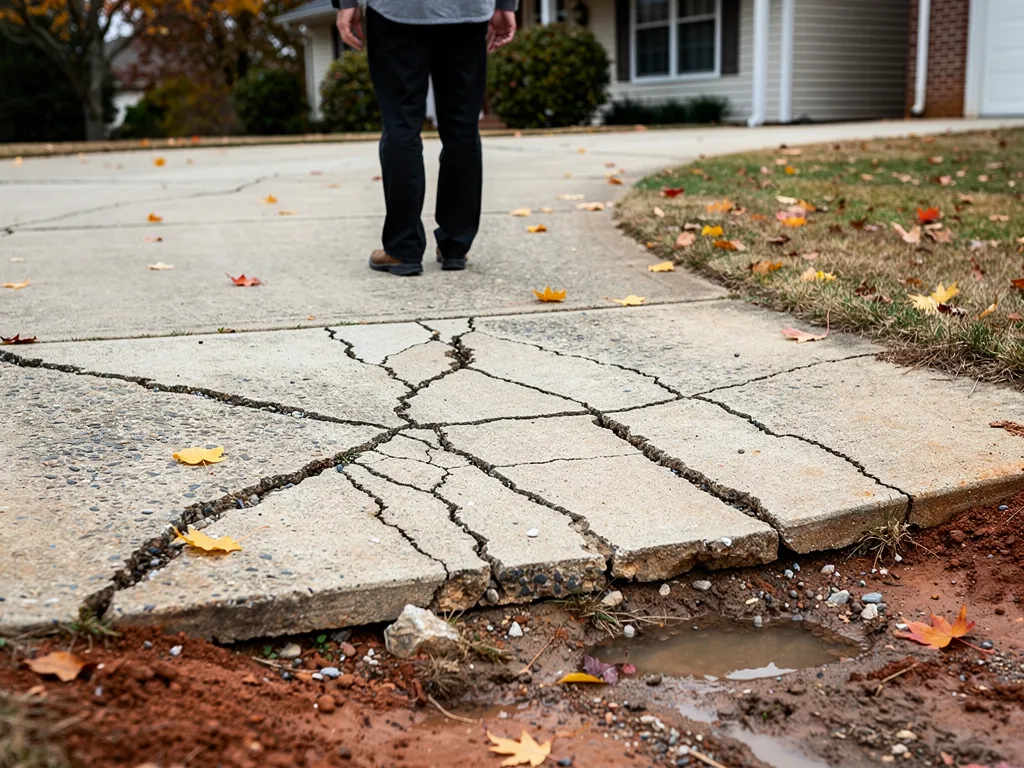
Freeze-thaw damage occurs when water enters a concrete driveway, freezes, expands, and gradually cracks or flakes the surface. For a concrete driveway in Fredericksburg VA or a concrete driveway in Stafford VA, the best time to check for early warning signs is in the fall, before winter weather can work on existing cracks. American Custom Concrete evaluates driveways throughout the area and determines whether the damage is minor or warrants a larger repair.
Key takeaways:
Freeze-thaw damage starts when water enters small cracks or pores, freezes, expands, and widens the opening.
Repeated freezing and thawing through the winter enlarges small cracks and can cause flaking and surface scaling.
Fredericksburg and Stafford’s clay-heavy soil and poor drainage can make freeze-thaw damage worse.
Small, stable cracks are often repairable, while widespread cracking or sunken slabs typically point toward replacement.
Fall is the right time for a driveway inspection, since problems are easier to address before winter arrives.
American Custom Concrete offers free estimates in Fredericksburg and Stafford, allowing homeowners to have a driveway assessed before the cold sets in.
Concrete appears solid, but it is not completely sealed against water. Over a winter, that fact can turn a hairline crack into a wide one. Understanding how freeze-thaw damage develops makes it easier to identify early and address appropriately.
What Is Freeze-Thaw Damage in Concrete?
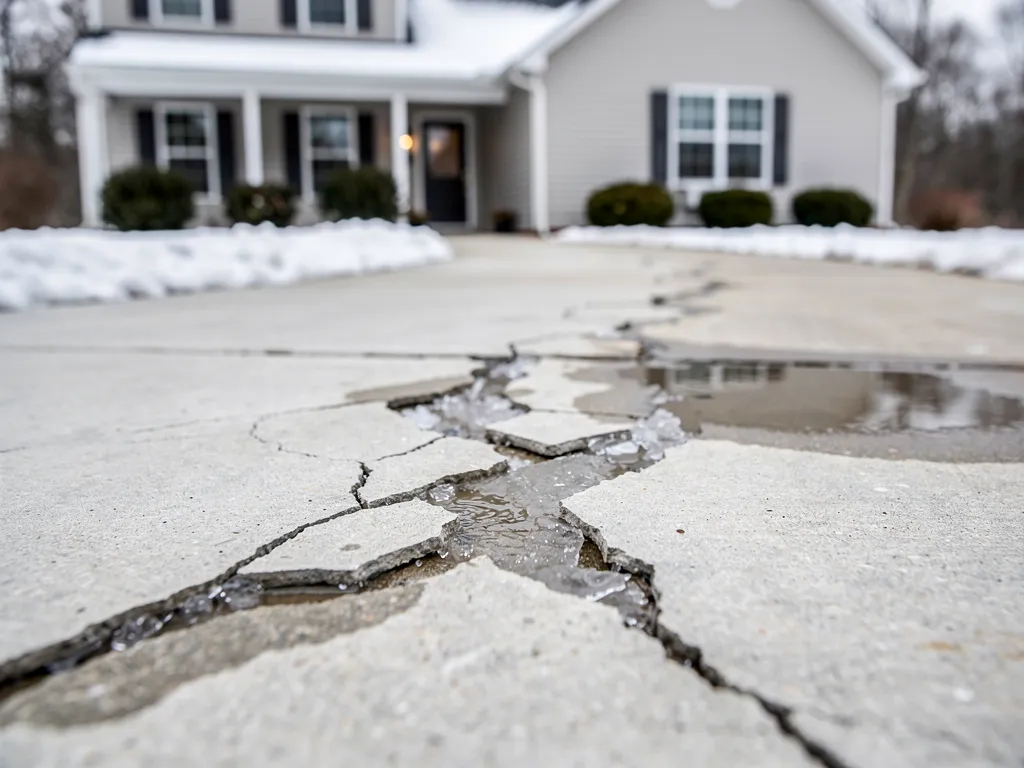
Freeze-thaw damage refers to the cracking, flaking, and breaking that occurs when water inside concrete freezes and expands. Water enters tiny cracks or the surface of the slab, turns to ice, and pushes outward. As it thaws and the cycle repeats, the damage increases incrementally.
Because the process repeats throughout winter, a crack that appears minor in November can be noticeably wider by spring. The damage tends to begin small and progress, which is why early detection matters.
Why Does Freezing Water Damage a Concrete Driveway?
Water expands when it freezes. Inside a crack or pore, that expansion has nowhere to go, so it presses against the surrounding concrete. Over many freeze-thaw cycles, the resulting pressure can widen cracks, break off small pieces at the surface, and loosen the top layer of the slab.
Does Fredericksburg and Stafford Weather Cause Freeze-Thaw Damage?
Yes. Winters in the Fredericksburg and Stafford area regularly move above and below freezing, meaning driveways can go through the freeze-thaw cycle many times in a single season. Combined with clay-heavy soil that swells when wet and shrinks as it dries, a driveway can be stressed from both above and below.
What Does Freeze-Thaw Damage Look Like on a Concrete Driveway?
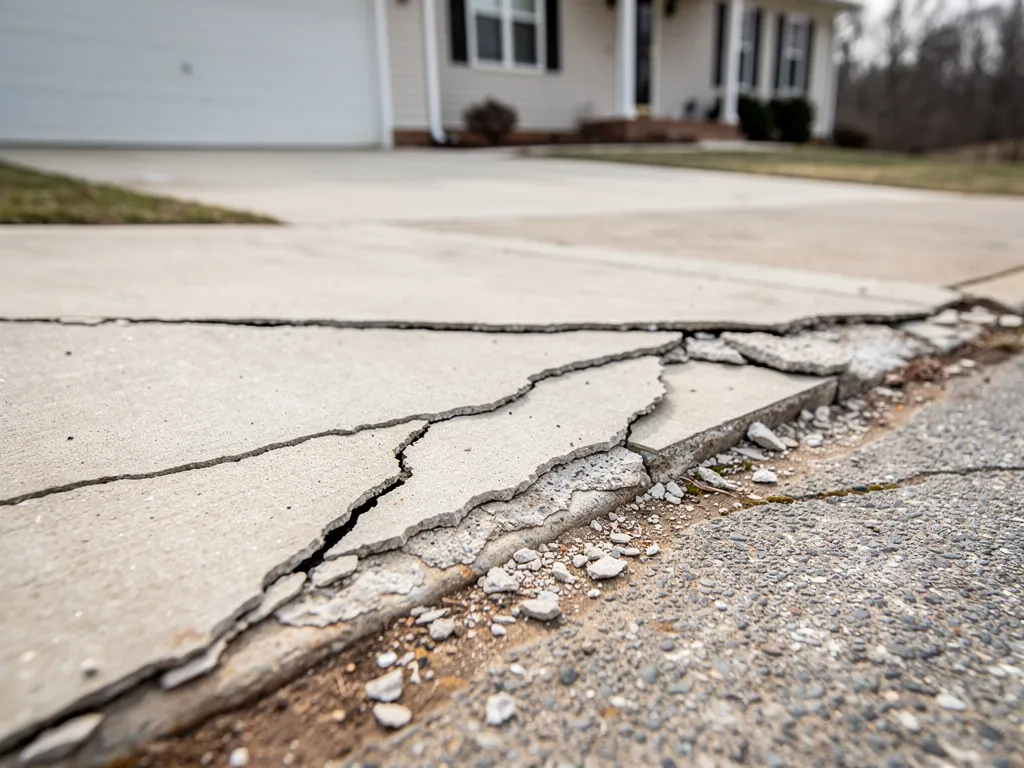
Common signs include widening cracks, a rough or flaking surface, small chips breaking off along cracks and edges, and areas where the surface has worn away. Existing cracks often appear larger after winter than they did in the fall.
What Is Surface Scaling and Flaking?
Surface scaling on a concrete driveway occurs when the top layer of concrete peels or flakes away, leaving a rough, pitted surface. It is among the most common visible signs of freeze-thaw damage. Light surface scaling on a concrete driveway is typically a surface-level issue, while deep or widespread scaling suggests the concrete itself is breaking down.
Which Cracks Should Concern Homeowners Most?
Cracks that are wide, continue to grow, or sit next to slabs at different heights deserve attention. These signs often indicate that the base or soil underneath is involved, not just the surface. More information on signs a driveway may be past repair is available on the replacement services page.
Can Freeze-Thaw Damage Be Prevented Before Winter?
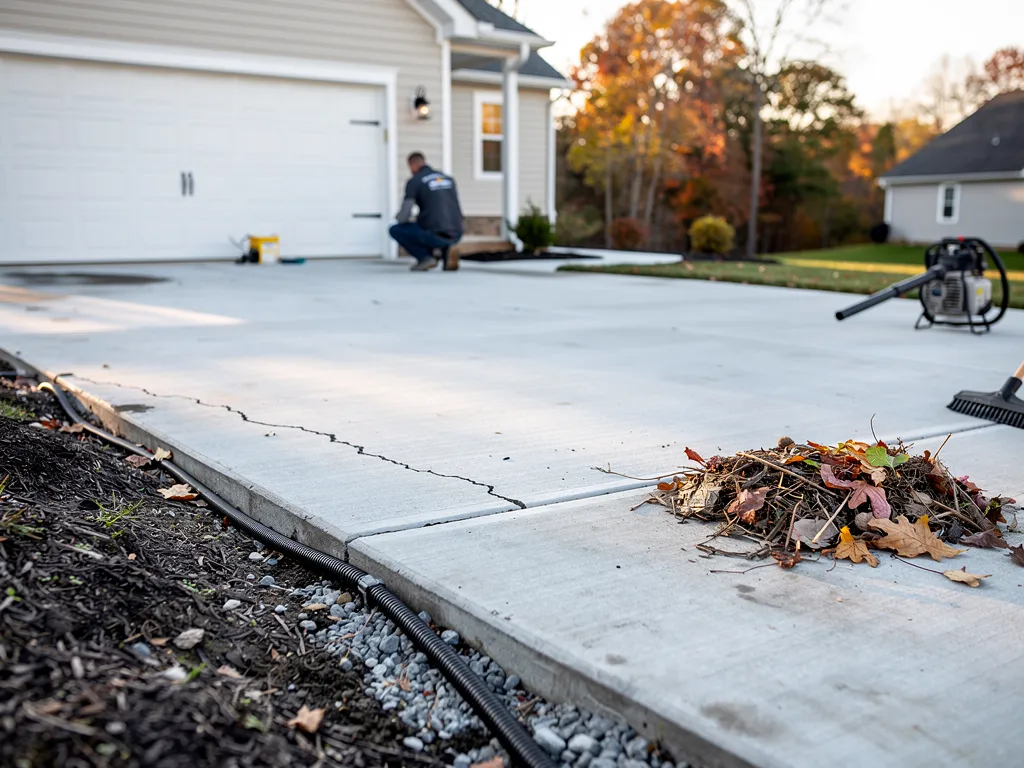
The risk can be reduced by keeping water out and off the driveway. The most effective steps include ensuring water drains away from the slab, keeping the surface clear of debris that holds moisture, and having existing cracks evaluated before the first hard freeze.
What Should Be Done This Fall?
A fall inspection should note any cracks, flaking areas, low spots, and places where water collects after rain. Photographs make it easier to compare conditions in spring and to discuss the damage during an estimate. Wide or growing cracks, uneven slabs, or standing water warrant a professional evaluation now, rather than after winter.
Can De-Icing Products Make It Worse?
They can. De-icing products can add to surface wear on concrete, particularly on a driveway that already shows cracking or flaking. This is an important consideration when planning for winter on a driveway with existing damage.
When Should a Freeze-Thaw Damaged Driveway Be Repaired or Replaced?
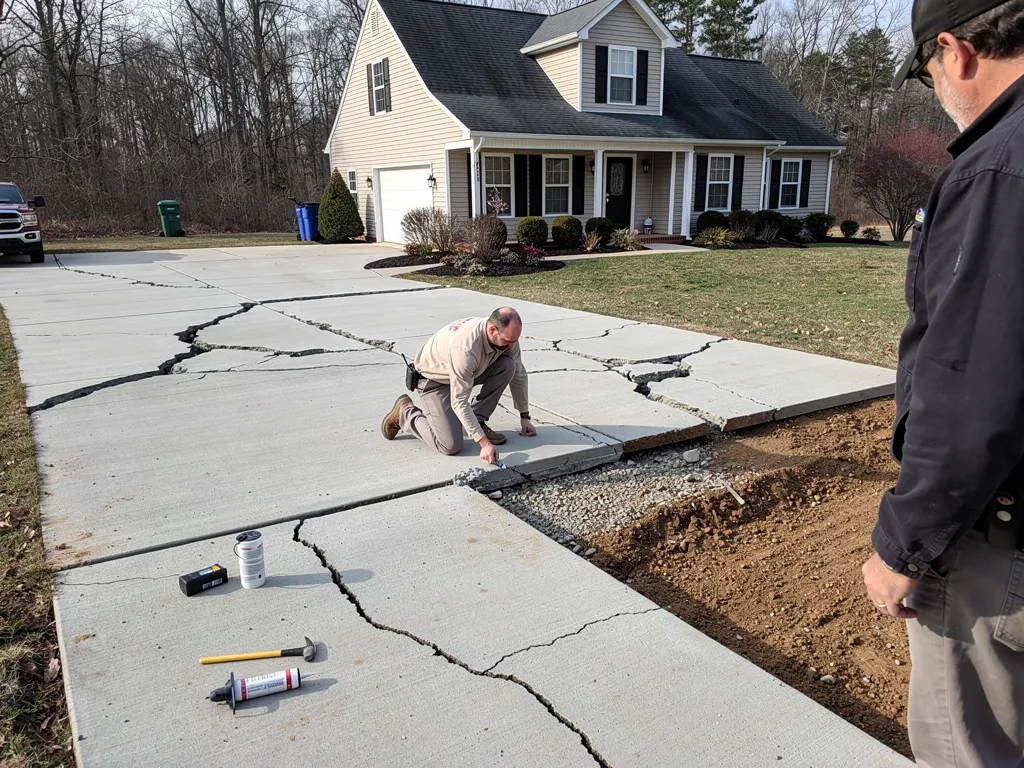
A straightforward concrete driveway crack repair is often sufficient when the damage is limited to small, stable areas and the slab remains level. For more extensive freeze-thaw damage repair, replacement is usually the better choice when cracking is widespread, slabs have sunk or heaved, or the damage keeps returning.
The deciding factor is what is happening underneath the surface. A repair that addresses only the surface will not stop movement in the base or soil, which is why an on-site evaluation matters. American Custom Concrete has served Fredericksburg and Stafford since 2011 and provides free estimates with a site visit, ensuring the recommendation is based on the specific driveway. Stafford homeowners in Aquia, Garrisonville, and Hartwood can find more information on the concrete contractors in Stafford, VA page.
Frequently Asked Questions
What is freeze-thaw damage to concrete?
It is cracking and surface breakdown caused by water freezing and expanding inside concrete. Repeated freezing and thawing over a winter can widen cracks and cause flaking.
How can freeze-thaw damage be identified on a driveway?
Signs include cracks that are wider after winter, a rough or flaking surface, and small chips along edges and cracks. Comparing photos from fall and spring makes changes easier to identify.
Should a driveway be repaired before winter?
When wide or growing cracks are already visible, fall is a good time to have them evaluated. Small, stable cracks are often repairable, while widespread damage may point toward replacement. A free estimate from American Custom Concrete can confirm which situation applies.
Wondering what winter will do to a driveway? Request a call back and American Custom Concrete will assess it, so Fredericksburg and Stafford homeowners can head into the cold months with a clear understanding of where they stand.