How Long Does It Typically Take to Complete a Concrete Sidewalk Project?
Most concrete sidewalk projects take anywhere from a day or two for a short residential section to about a week for longer stretches, once you factor in site prep, pouring, and initial curing time. The concrete itself is typically firm enough to walk on within 24 to 48 hours, though full curing takes closer to a month. American Custom Concrete, Inc. works with Fredericksburg and Stafford homeowners to plan realistic timelines based on project size and site conditions.
Key Takeaways
- Small residential sidewalk sections often wrap up in a day or two of actual work
- Longer or more complex sidewalks can take closer to a week from prep to finish
- Weather and curing time are the two biggest variables affecting how long a project takes
- Site preparation and permitting can add time before pouring even begins
- Hiring an experienced contractor generally keeps a project on schedule and avoids costly delays
- American Custom Concrete helps Fredericksburg and Stafford homeowners plan sidewalk projects with realistic timelines from the start
What Are the Typical Timeframes for Completing a Concrete Sidewalk?
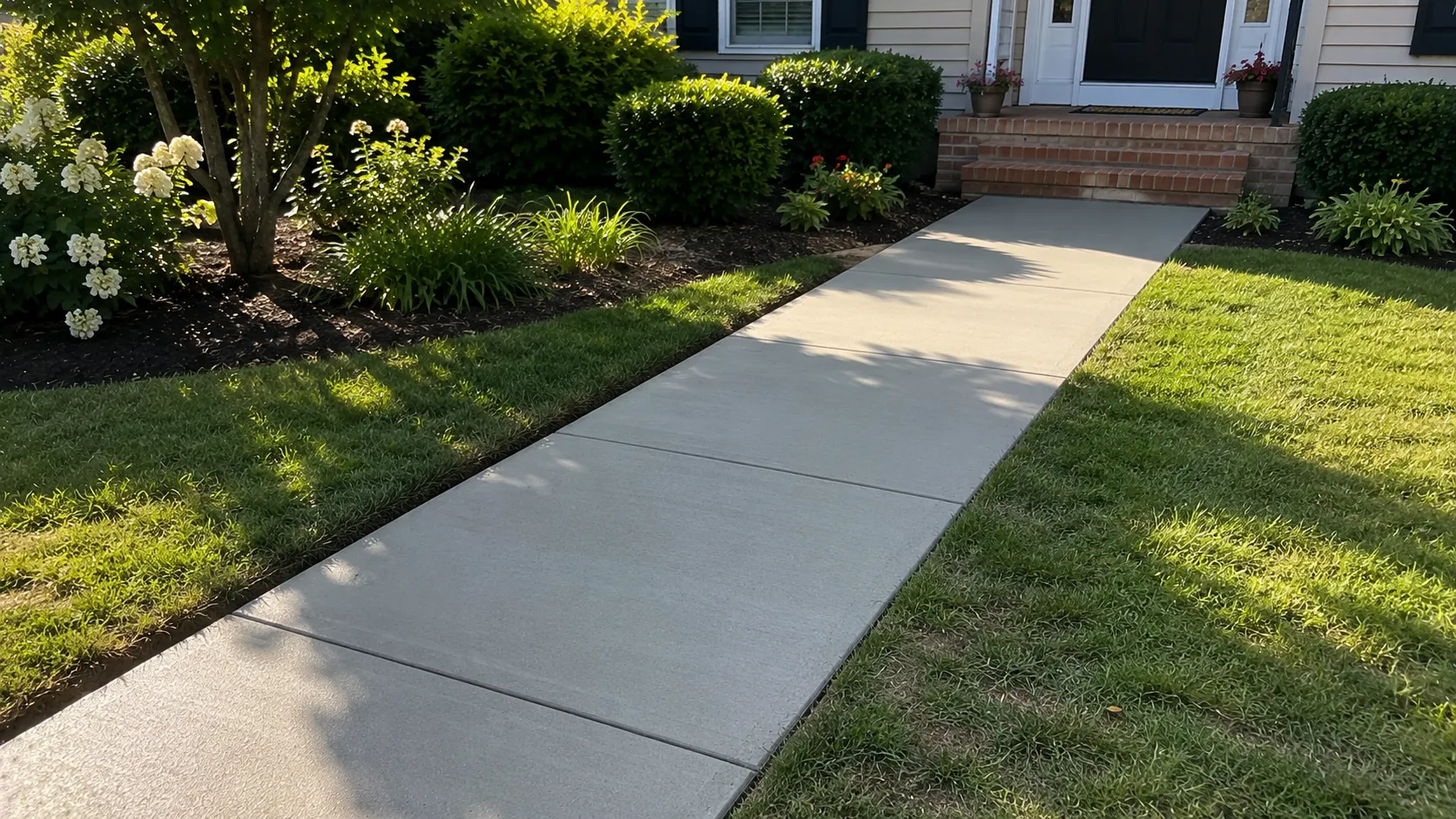
Timeframes vary depending on the length of the sidewalk, site conditions, and weather, but most residential projects follow a fairly predictable pattern.
How Long Does Pouring and Setting Concrete Usually Take?
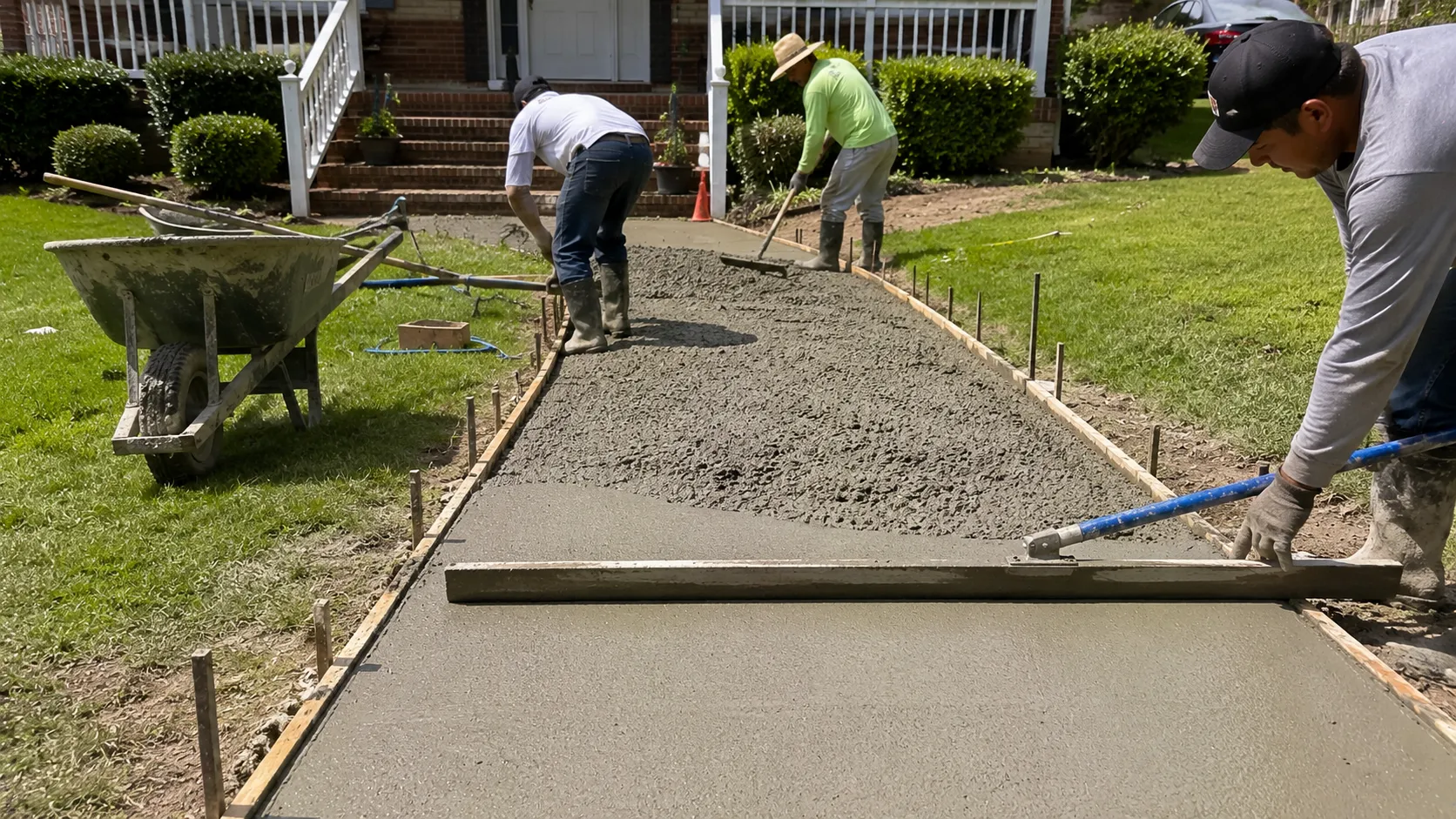
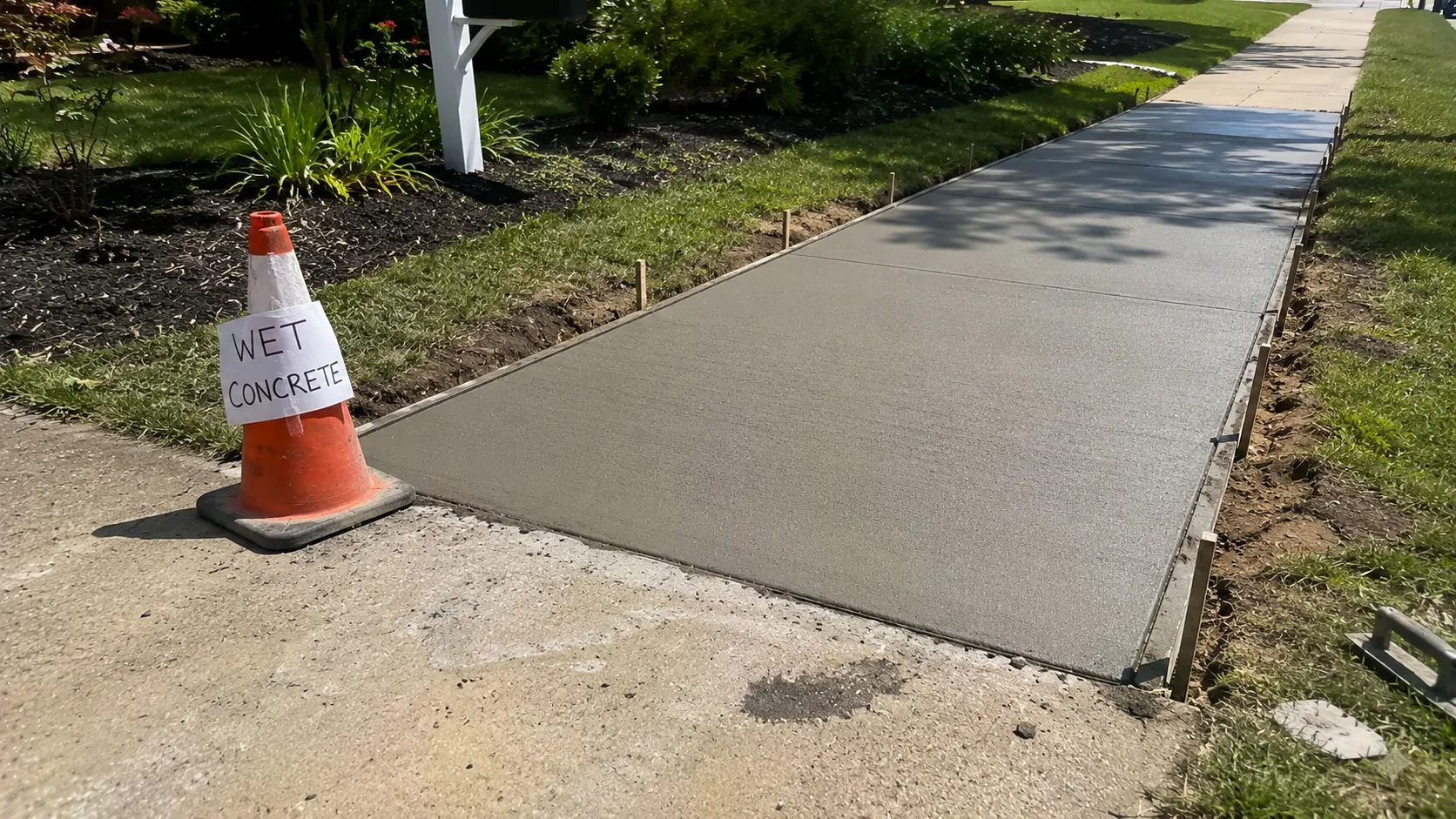
Pouring itself is usually a one-day job for a standard residential sidewalk section, since concrete needs to be poured and finished in a single continuous process. After pouring, the surface typically becomes firm enough to walk on within 24 to 48 hours, though it should be kept free of heavy use for several days beyond that.
What Are the Average Project Duration Estimates by Sidewalk Size?
A short sidewalk section, like a front walkway, often takes just a day or two of active work from prep through pouring. Longer sidewalks, especially ones that wrap around a property or connect multiple areas, can take closer to a week when you account for more extensive site preparation and a larger pour.
Which Factors Most Affect the Duration of a Concrete Sidewalk Project?
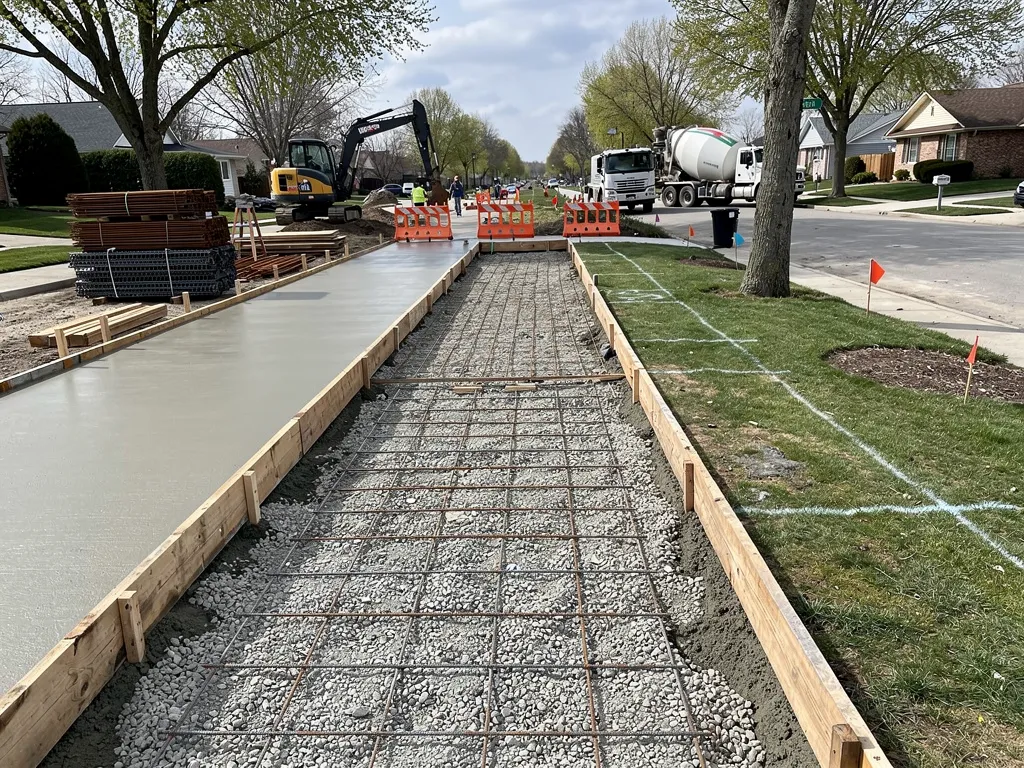
A few key variables tend to have the biggest impact on how quickly a sidewalk project actually moves.
How Do Weather Conditions Impact Concrete Sidewalk Completion Time?
Concrete needs a reasonable temperature range to cure properly, so extreme heat, cold, or heavy rain can delay pouring or extend curing time. In Central Virginia, this typically means spring and fall offer the most predictable scheduling, while summer heat and winter cold can occasionally push a timeline back a few days.
In What Ways Do Site Preparation and Permitting Affect Project Length?
Removing an old sidewalk, grading the site, and addressing drainage all take place before any concrete is poured, and the scope of that prep work directly affects the overall timeline. Depending on your locality, permitting requirements for sidewalk work can also add time upfront, since approval sometimes needs to happen before construction begins.
How Does the Concrete Sidewalk Construction Process Unfold Over Time?
Understanding the full process helps set realistic expectations for how a project moves from start to finish.
What Are the Key Steps From Planning to Final Inspection?
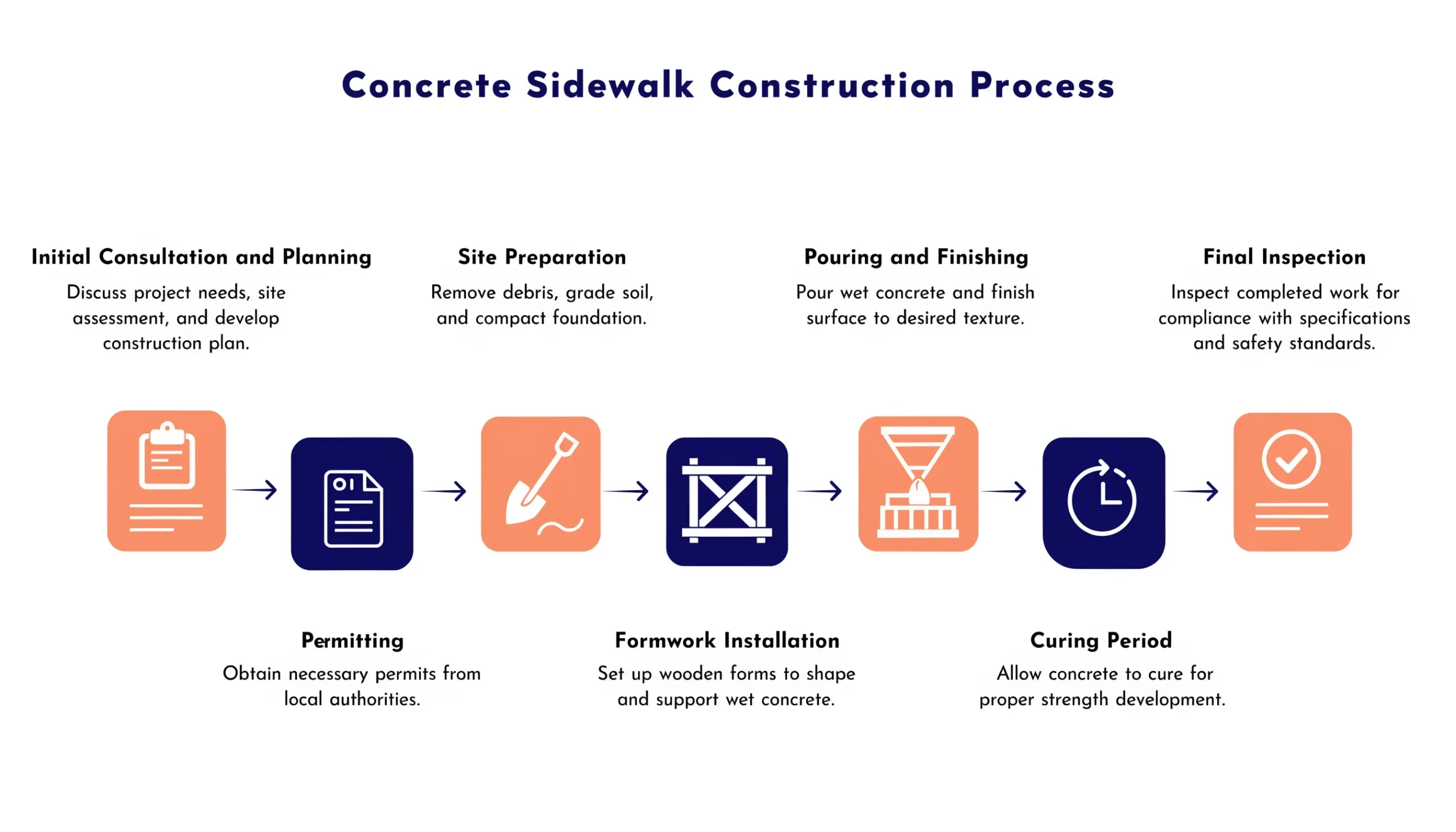
A typical sidewalk project follows this general sequence:
- Initial consultation and planning – discussing layout, dimensions, and finish
- Permitting, if required by your locality
- Site preparation – removing any old surface, grading, and compacting the base
- Formwork installation – setting forms to shape the sidewalk
- Pouring and finishing – pouring the concrete and applying the finish
- Curing period – allowing the concrete to set before regular use
- Final inspection, if required for the project
How Much Time Is Needed for Curing Before the Sidewalk Can Be Used?
Concrete is generally firm enough for light foot traffic within 24 to 48 hours after pouring, but it continues to gain strength for about 28 days as it fully cures. Avoiding heavy loads or vehicle traffic during that early curing window helps prevent cracking or surface damage down the road.
Can Hiring Professionals Shorten the Time to Complete a Concrete Sidewalk?
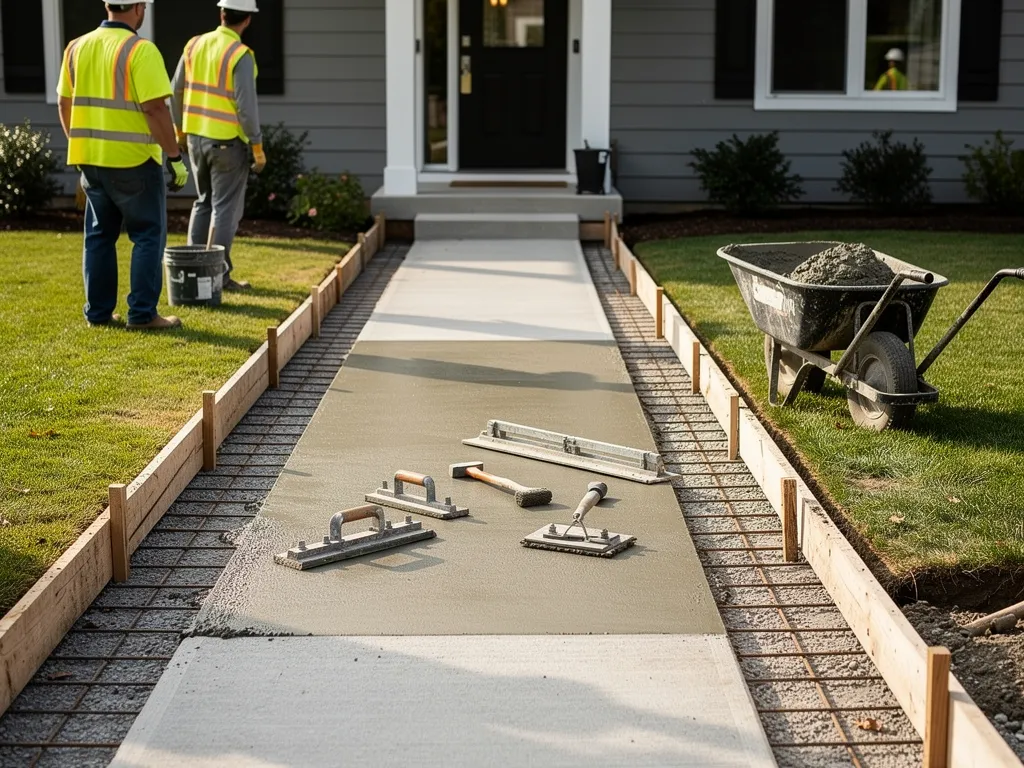
Experience matters more than most homeowners expect when it comes to keeping a project on schedule.
How Do Experienced Contractors Influence Project Speed?
A contractor who has handled similar projects repeatedly tends to move through site prep, pouring, and finishing more efficiently, simply because they’ve already worked out the logistics that trip up less experienced crews. American Custom Concrete brings 25+ years of experience to sidewalk and hardscape projects throughout Fredericksburg and Stafford, which helps keep timelines realistic and on track.
What Are the Time Benefits of Using Specialized Concrete Techniques?
Techniques like proper base compaction and correctly timed finishing reduce the likelihood of problems that require rework later, which indirectly keeps a project moving faster overall. Getting the process right the first time is often what separates a project that finishes on schedule from one that runs into delays.
What Are Common Delays That Can Prolong Concrete Sidewalk Projects?
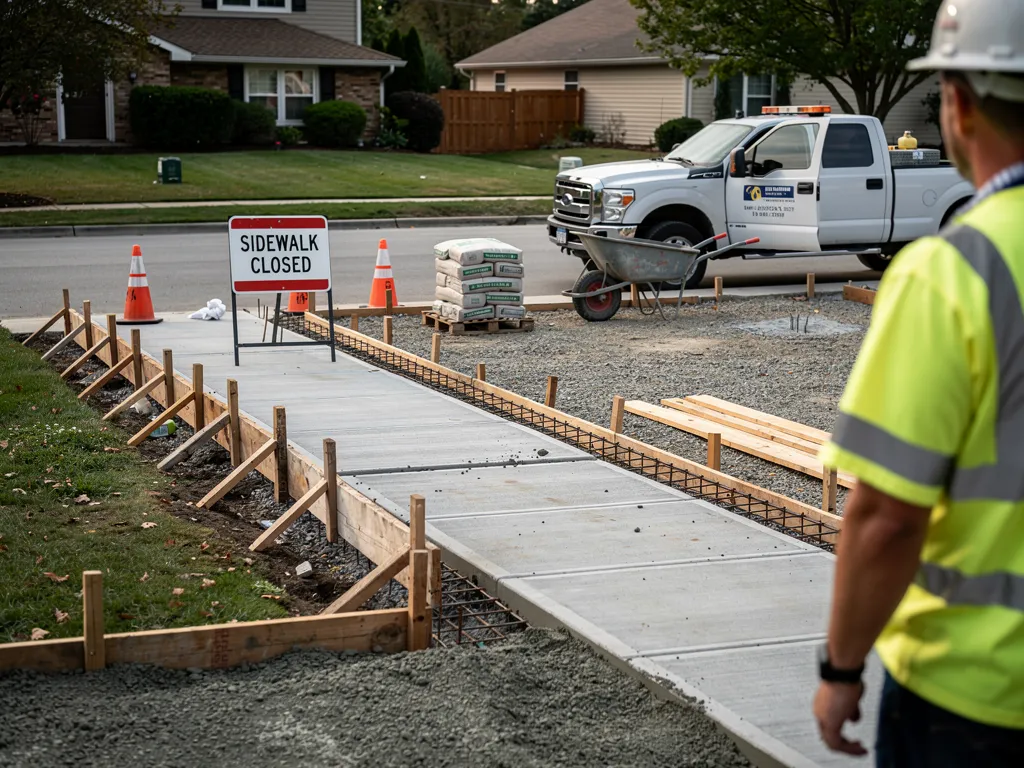
Even well-planned projects can run into a few common snags worth knowing about ahead of time.
How Do Supply Chain and Material Availability Affect Scheduling?
Material availability can occasionally affect scheduling, particularly during busier seasons when demand for concrete work is higher across the industry. Booking your project a bit further in advance can help avoid this kind of delay.
What Role Do Inspections and Weather Interruptions Play in Timing?
If your project requires a permit or inspection, waiting on approval can add time before or after construction. Weather interruptions, particularly unexpected rain during a scheduled pour, are one of the most common reasons a project timeline shifts by a day or two.
How Can Homeowners and Builders Prepare to Minimize Concrete Sidewalk Project Time?
A little preparation on the homeowner’s side can help keep a project moving smoothly once work begins.
What Steps Should Be Taken Before Construction Begins?
Clearing the work area of furniture, plants, or debris, and confirming access for equipment and material delivery, helps avoid delays once the crew arrives. Discussing your desired timeline upfront also gives your contractor the chance to flag any potential scheduling conflicts early.
How to Coordinate Efficient Scheduling and Communication With Contractors?
Clear communication about your timeline expectations, along with prompt responses to any questions during the project, helps keep things on track. A contractor who provides a realistic schedule upfront, rather than a vague estimate, is generally easier to plan around.
FAQ
How long does it take to pour a concrete sidewalk? Pouring itself is usually a one-day job for a standard residential sidewalk section, with the surface firm enough to walk on within 24 to 48 hours afterward. Full curing takes closer to a month, though light use is fine well before that point.
What causes delays in concrete sidewalk projects? Weather, permitting requirements, and material availability during busier seasons are the most common causes of delay. Clear planning and scheduling in advance can help minimize these issues.
Does American Custom Concrete provide timeline estimates for sidewalk projects in Fredericksburg and Stafford? Yes, American Custom Concrete, Inc. provides free estimates that include a realistic project timeline for sidewalk work throughout Fredericksburg, Stafford, and the surrounding area.
Planning a new sidewalk and wondering how it’ll fit your schedule? American Custom Concrete gives Fredericksburg and Stafford homeowners a clear, realistic timeline up front – no guesswork, just a straight answer for your project.